Trump Warns of New Iran Strikes if Tehran 'Misbehaves'
Trump Leaves Door Open to Renewed Iran Strikes as Nuclear Talks Stall
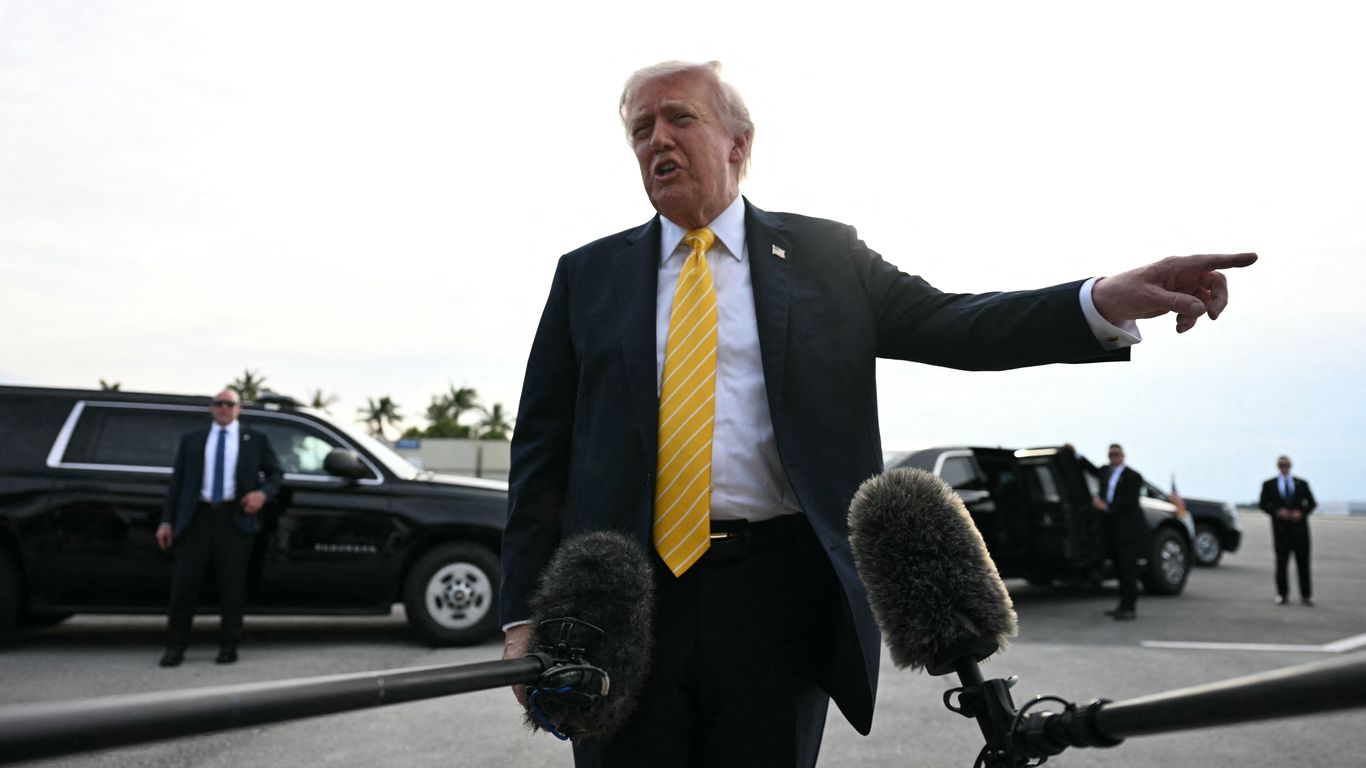
President Donald Trump has warned that the United States could resume military strikes against Iran if negotiations over a post-war nuclear agreement continue to falter, signaling that the fragile ceasefire brokered in April 2026 remains under serious pressure. Speaking to reporters, Trump declined to rule out offensive action, stating: "If they misbehave, if they do something bad, right now we'll see. But it's a possibility that could happen."
The warning comes as the U.S. and Iran remain locked in a diplomatic stalemate more than four weeks after a conditional ceasefire was declared, with key disputes over Iran's nuclear program and the status of the Strait of Hormuz showing no signs of resolution. According to CNBC, Trump said he was not satisfied with the latest Iranian proposal, while Iran's foreign minister indicated Tehran was prepared for diplomacy only if the United States changes its approach.
Where the Conflict Stands: Ceasefire, Blockade, and Broken Talks
The 2026 U.S.-Iran war began on February 28, 2026, when the United States and Israel launched coordinated airstrikes on Iranian military, government, and nuclear sites, also resulting in the assassination of Iranian Supreme Leader Ali Khamenei. The strikes came less than 48 hours after U.S. Special Envoy Steve Witkoff and Jared Kushner met with Iranian Foreign Minister Abbas Araghchi in Geneva for a third round of Omani-mediated nuclear talks, according to the Arms Control Association.
Iran responded with missile and drone strikes against Israel and U.S. regional assets, and closed the Strait of Hormuz — the critical waterway through which a significant share of the world's oil supply passes. On April 13, 2026, the United States launched a counter-blockade of the strait, targeting all ships seeking to reach Iranian ports, according to the House of Commons Library. A conditional ceasefire mediated by Pakistan was declared on April 8, 2026.
The human cost of the conflict has been severe. According to Al Jazeera, the U.S.-based Human Rights Activists in Iran news agency reported that at least 1,701 civilians have been killed in the war, including 254 children. The broader regional conflict, which escalated into the 2026 Lebanon war, killed more than 2,000 civilians and militants combined, according to Wikipedia's entry on the 2026 Iran war.
Despite the ceasefire, both economic and strategic pressure remain acute. According to the UK Royal Navy, as cited by CBS News, shipping traffic in the Strait of Hormuz has dropped by more than 90% since the conflict began. CNN reported that the average price for a gallon of gasoline in the United States reached $4.30 as of approximately April 30, 2026, as Trump was laying the groundwork for an extended blockade of Iranian ports.
Iran's Proposal Rejected: Nuclear Talks Remain the Core Sticking Point
Iran's latest diplomatic overture proposed reopening the Strait of Hormuz and formally ending the war, while postponing nuclear talks to a later stage. The proposal was conveyed through mediators, according to CNBC. Trump publicly rejected the sequencing, stating his position clearly: "They want to settle. They don't want me to keep the blockade. I don't want to [lift the blockade], because I don't want them to have a nuclear weapon."
The U.S. position is that sanctions relief, an end to the blockade, and any broader peace agreement are all contingent on a comprehensive nuclear deal — not a phased approach that would defer those talks. According to Axios, Trump rejected Iran's offer to first open the Strait of Hormuz while postponing nuclear discussions, making clear the blockade would remain in place until a nuclear agreement is reached.
The nuclear dimension of the standoff is not without foundation. According to the UK House of Commons Library, the International Atomic Energy Agency said in early June 2025 that it had verified Iran had more than 400 kilograms of uranium enriched to 60% — well above the threshold needed for civilian nuclear power, and a level that experts have long flagged as a potential step toward weapons-grade material.
According to the House of Commons Library, the ongoing ceasefire talks being mediated by Pakistan cover a wide range of issues, including the Strait of Hormuz, Iran's nuclear and ballistic missile program, reconstruction, sanctions, and a long-term peace agreement — underscoring the complexity of reaching any durable settlement.
CENTCOM Strike Plan Prepared as Diplomatic Leverage
Trump's public warnings are not occurring in a vacuum. According to Axios, U.S. Central Command (CENTCOM) has prepared a plan for a "short and powerful" wave of strikes on Iran in hopes of breaking the negotiating deadlock, according to three sources with knowledge of the planning. The Times of Israel also reported, citing the Wall Street Journal, that Trump and his advisers were examining the possibility of resuming limited military strikes alongside the existing blockade of the Strait of Hormuz.
At the same time, Trump has taken steps to manage the legal and political framing of any potential resumption of hostilities. According to CBS News, Trump told congressional leaders that "hostilities" with Iran have "terminated," invoking a War Powers Resolution deadline and stating: "There has been no exchange of fire between the United States Forces and Iran since April 7, 2026." This declaration allows the administration to sidestep congressional authorization requirements while keeping the option of renewed strikes open.
The United States and Israel suspended their bombing campaign against Iran approximately four weeks before the CNBC report of May 2, 2026, but the two sides appeared no closer to a deal, according to CNBC.
Expert Reactions and Official Statements
U.S. Secretary of State Marco Rubio has articulated the administration's core demand in unambiguous terms: "We have to ensure that any deal that is made, any agreement that is made, is one that definitively prevents them from sprinting towards a nuclear weapon at any point."
The White House has echoed this framing. White House spokesperson Olivia Wales stated: "As the president has said, the United States holds the cards and will only make a deal that puts the American people first, never allowing Iran to have a nuclear weapon."
Iranian President Masoud Pezeshkian, meanwhile, has pushed back against the U.S. naval siege of Iranian ports, describing it as far more than a diplomatic instrument. According to Al Jazeera, Pezeshkian said: "What is being done under the guise of a naval blockade is an extension of military operations against a nation paying the price for its resistance and independence."
Retired U.S. General Mark Kimmitt, commenting on the durability of U.S. strategic aims in the region, noted simply that "the compass needle doesn't change" — a remark that reflects the consistent trajectory of American pressure on Iran's nuclear ambitions regardless of the tactical twists in the negotiations.
What Comes Next: A Fragile Moment in a High-Stakes Negotiation
The coming weeks are likely to be decisive. With CENTCOM's strike plan reportedly prepared and Trump publicly signaling its possible use, the pressure on Iranian negotiators to move toward a comprehensive agreement is substantial. At the same time, Iran's insistence on separating the Strait of Hormuz reopening from nuclear talks — and its characterization of the blockade as an act of war — suggests the gap between the two sides remains wide.
The Pakistan-mediated ceasefire talks are continuing, and the framework under discussion covers the full range of contested issues: the strait, nuclear and ballistic missile programs, sanctions, reconstruction, and a long-term peace deal. But with Trump declining to endorse any phased approach and Iran's foreign minister conditioning diplomacy on a U.S. change of posture, the path to a durable agreement is far from clear.
For global energy markets, the stakes extend well beyond the Middle East. A 90% drop in Strait of Hormuz shipping traffic — the largest disruption to global energy supplies in recent history — and U.S. gasoline prices at $4.30 per gallon are already tangible consequences of the standoff. Any resumption of strikes, or further entrenchment of the blockade, could deepen those disruptions significantly.
For more tech and global news, visit our news section.
Why This Matters Beyond the Headlines
Geopolitical instability of this scale has cascading effects that reach into everyday life — from energy costs and supply chain disruptions to the psychological burden of sustained uncertainty. At Moccet, we believe that staying informed is itself a form of resilience. Understanding the forces shaping your world — whether that's a war affecting global oil prices or a policy decision raising your cost of living — is a foundational layer of personal and professional well-being. Knowledge is the first step toward adaptation. Join the Moccet waitlist to stay ahead of the curve.