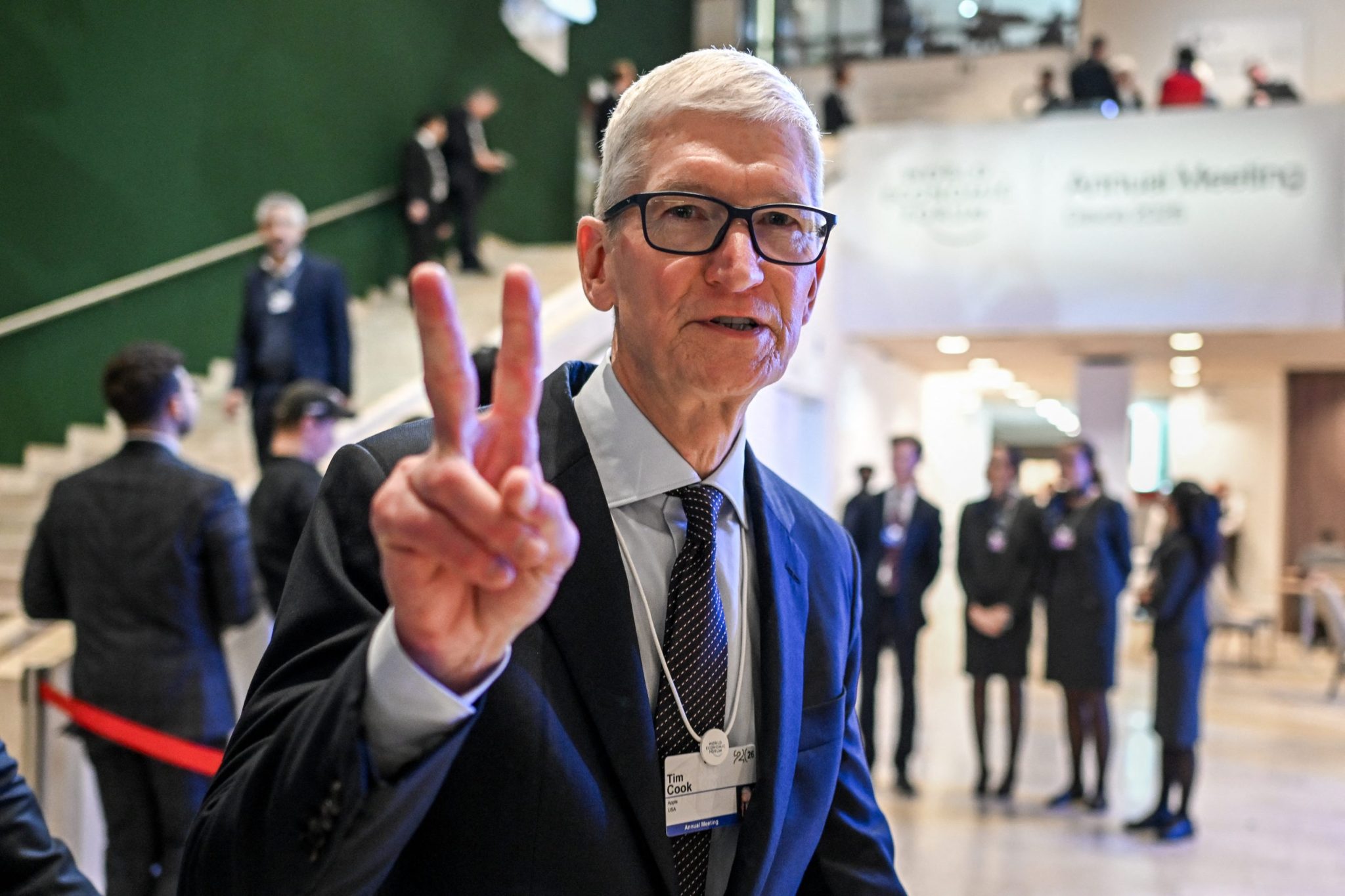
Tim Cook Steps Down as Apple CEO, John Ternus Takes Helm
In a seismic shift for the technology industry, Apple CEO Tim Cook announced his resignation today, ending his transformative 15-year tenure at the helm of the world's most valuable company. John Ternus, Apple's Senior Vice President of Hardware Engineering, will succeed Cook as Chief Executive Officer, marking the most significant leadership transition at Apple since Cook himself took over from co-founder Steve Jobs in 2011.
The End of an Era: Tim Cook's Legacy at Apple
Cook's departure marks the conclusion of one of the most successful corporate leadership runs in modern business history. Under his stewardship since August 2011, Apple's market capitalization soared from approximately $350 billion to over $3.5 trillion as of April 2026, making it the first company to cross multiple trillion-dollar milestones.
During Cook's tenure, Apple revolutionized multiple product categories beyond the iPhone. The company launched the Apple Watch in 2015, which became the world's best-selling smartwatch, and introduced the Apple Vision Pro mixed reality headset in 2024, establishing Apple's foothold in spatial computing. The transition to Apple Silicon chips beginning in 2020 transformed the Mac lineup, delivering unprecedented performance and efficiency gains that reshaped the entire PC industry.
Cook also steered Apple through numerous challenges, including supply chain disruptions during the COVID-19 pandemic, trade tensions with China, and increasing regulatory scrutiny worldwide. His emphasis on privacy as a fundamental human right became a cornerstone of Apple's brand identity, differentiating the company from competitors like Google and Meta who rely heavily on data collection.
The services business, which includes the App Store, iCloud, Apple Music, and Apple TV+, grew from $8 billion in annual revenue when Cook took over to over $85 billion in 2025. This diversification reduced Apple's dependence on iPhone sales and created recurring revenue streams that analysts viewed as crucial for long-term growth.
John Ternus: The Hardware Visionary Taking Charge
John Ternus, 49, brings deep technical expertise and a proven track record of hardware innovation to the CEO role. Since joining Apple in 2001, Ternus has been instrumental in developing some of the company's most successful products. He played key roles in the development of the iPhone, iPad, and the groundbreaking Apple Silicon transition that brought custom ARM-based processors to Mac computers.
As Senior Vice President of Hardware Engineering since 2013, Ternus has overseen the development of every major Apple product launch in recent years. He was a driving force behind the M-series chips that delivered industry-leading performance while maintaining exceptional battery life. His team also developed the innovative camera systems that have kept iPhones competitive in the smartphone photography space.
Ternus has been increasingly visible in Apple's public communications, presenting at keynote events and appearing in product introduction videos. Industry observers have long speculated that his technical background and deep institutional knowledge made him a potential successor to Cook. Unlike Cook's background in operations and supply chain management, Ternus brings an engineering-first perspective that may signal a shift in Apple's strategic priorities.
The new CEO's leadership style emphasizes cross-functional collaboration and pushing the boundaries of what's technically possible. Colleagues describe him as detail-oriented but pragmatic, with an ability to translate complex technical concepts into compelling product features that resonate with consumers.
Strategic Implications for Apple's Future Direction
The leadership transition comes at a critical juncture for Apple as the company navigates several significant challenges and opportunities. The smartphone market has reached maturity in key regions, with iPhone sales growth slowing in recent quarters. Ternus's hardware expertise may prove crucial as Apple seeks to develop new product categories that can drive future growth.
Artificial intelligence represents perhaps the biggest strategic opportunity and challenge facing the new CEO. While Apple has integrated AI capabilities across its products through features like Siri and computational photography, competitors like Google and OpenAI have gained attention with more advanced generative AI systems. Ternus will need to accelerate Apple's AI initiatives while maintaining the company's commitment to on-device processing and user privacy.
The Apple Vision Pro, launched in early 2024, represents Apple's biggest bet on a new product category since the Apple Watch. Initial sales have been modest due to the $3,499 price point, but the technology has received praise for its innovation. Ternus's hardware engineering background positions him well to drive down costs and improve the user experience for future iterations of the mixed reality platform.
Regulatory pressures continue to mount globally, with the European Union's Digital Markets Act forcing changes to the App Store and iPhone's default apps. The new CEO will need to balance compliance with regulations while preserving Apple's integrated ecosystem that has been central to its success and premium pricing power.
Industry Context and Market Reaction
The announcement sent shockwaves through Silicon Valley and global financial markets. Apple's stock initially declined 3% in after-hours trading before recovering as investors processed the implications of the leadership change. The transition represents one of the most significant CEO successions in the technology sector since Satya Nadella took over Microsoft in 2014.
Technology industry analysts expressed cautious optimism about the transition, noting Ternus's deep product knowledge and proven ability to execute complex hardware projects. His engineering background contrasts with Cook's operational expertise, potentially signaling a renewed focus on breakthrough innovations rather than incremental improvements.
The timing of Cook's departure has surprised many industry watchers, as Apple continues to generate record revenues and profits. However, at 65, Cook may be looking to step back while the company remains at its peak performance. The smooth succession plan suggests careful preparation by Apple's board of directors to ensure continuity of leadership.
Competitors including Samsung, Google, and Meta will be watching closely for any strategic shifts under Ternus's leadership. His hardware-centric background may accelerate Apple's development of new device categories, potentially disrupting established markets or creating entirely new ones.
Expert Analysis and Market Implications
"This transition represents a pivotal moment for Apple and the broader technology industry," said Dr. Sarah Chen, technology analyst at Wedbush Securities. "John Ternus brings a unique combination of technical vision and execution capability that could unlock new growth opportunities for Apple in emerging categories like spatial computing and artificial intelligence."
Industry veteran and former Apple executive Tony Fadell, often called the "father of the iPod," praised the choice: "John understands Apple's DNA of creating products that seamlessly blend hardware and software. His engineering mindset, combined with Apple's world-class design and operations teams, positions the company well for its next chapter of innovation."
The leadership change may also impact Apple's approach to partnerships and ecosystem development. Ternus has historically focused on tight integration between Apple's hardware and software, but the AI revolution may require new forms of collaboration with external partners and developers.
Wall Street appears cautiously optimistic, with several analysts maintaining their buy ratings on Apple stock while acknowledging the uncertainty that comes with any major leadership transition. The company's strong financial position and diverse product portfolio provide stability during the changeover period.
What's Next for Apple Under New Leadership
The transition timeline and specific details of Ternus's strategic vision remain to be announced. Apple has historically managed leadership changes with careful planning and minimal disruption to operations. The company's strong institutional culture and experienced executive team should provide continuity during the transition period.
Key areas to watch include Apple's AI strategy, the expansion of the Vision Pro platform, and potential new product categories. Ternus's hardware expertise may accelerate development of rumored products including Apple-branded autonomous vehicles, advanced health monitoring devices, and next-generation wearables.
The new CEO will also face decisions about Apple's massive cash reserves, currently exceeding $200 billion. Strategic acquisitions in AI, augmented reality, or health technology could become more likely under leadership with deep technical expertise.
Investor attention will focus on Ternus's first earnings call and strategic communications as CEO, which will provide insights into his priorities and vision for Apple's future direction in an increasingly competitive technology landscape.
For more tech news, visit our news section.
As Apple enters this new era of leadership, the implications extend far beyond Silicon Valley. The devices and platforms that emerge under Ternus's guidance will shape how billions of people work, communicate, and optimize their daily lives. From health monitoring capabilities to productivity enhancements, Apple's innovations directly impact personal wellness and performance. Join the Moccet waitlist to stay ahead of the curve as we continue tracking how technology leadership changes affect the future of health and productivity platforms.