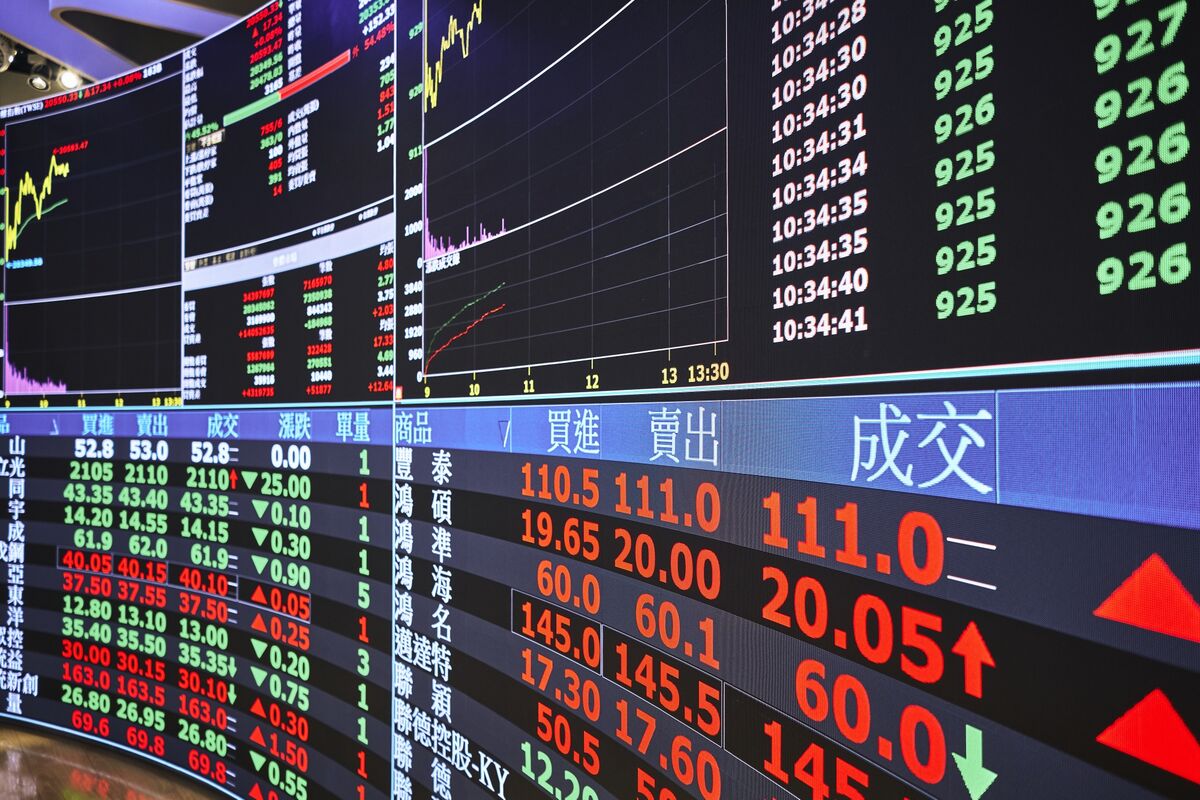
Taiwan's $4T Market Cap Surge: AI Boom Reshapes Global Finance
Taiwan's stock market capitalization has reached a historic milestone of $4 trillion, surpassing the United Kingdom's market value for the first time as the island's technology companies experience a remarkable resurgence driven by artificial intelligence demand and improved geopolitical stability following de-escalation in the Iran conflict.
Taiwan's Tech Giants Drive Historic Market Surge
The unprecedented surge in Taiwan's market capitalization represents a seismic shift in global financial markets, with the island's semiconductor and AI-focused companies leading the charge. This milestone positions Taiwan as a dominant force in the global technology ecosystem, reflecting investor confidence in the region's continued leadership in artificial intelligence infrastructure and chip manufacturing.
Taiwan Semiconductor Manufacturing Company (TSMC), the world's largest contract chipmaker, has been a primary beneficiary of the AI boom. The company's advanced chip manufacturing capabilities have become increasingly critical as demand for AI processors continues to soar across industries. The recent surge in TSMC's stock price alone has contributed significantly to Taiwan's overall market valuation, with investors betting on sustained growth in AI-related demand through 2026 and beyond.
The island's other major technology players, including MediaTek, ASE Technology Holding, and Advanced Semiconductor Engineering, have also experienced substantial gains. These companies form the backbone of Taiwan's semiconductor supply chain, providing essential components and services that power everything from smartphones to data centers running advanced AI workloads.
Market analysts point to several factors driving this exceptional performance, including increased global investment in AI infrastructure, expanding partnerships between Taiwanese firms and international technology giants, and growing recognition of Taiwan's strategic importance in the global semiconductor supply chain. The timing of this surge coincides with major technology companies announcing significant expansions of their AI capabilities, creating sustained demand for Taiwan's specialized manufacturing expertise.
Geopolitical Stability Boosts Investor Confidence
The recent de-escalation in the Iran conflict has contributed significantly to the positive sentiment surrounding Taiwan's markets. Reduced geopolitical tensions in key regions have alleviated investor concerns about potential supply chain disruptions and global economic instability, creating a more favorable environment for technology investments.
This improved geopolitical climate has been particularly beneficial for Taiwan, given its crucial role in global semiconductor production. Previous concerns about potential conflicts affecting Taiwan's manufacturing capabilities had created volatility in the markets, but the recent stabilization has renewed investor confidence in the island's long-term prospects.
International investment flows into Taiwan have accelerated as fund managers seek exposure to AI-driven growth opportunities. The combination of political stability and technological leadership has made Taiwan an increasingly attractive destination for global capital, with foreign institutional investors significantly increasing their holdings in Taiwanese technology stocks over the past quarter.
The broader Asian technology sector has also benefited from this positive sentiment, but Taiwan has emerged as the clear leader due to its concentrated expertise in semiconductor manufacturing and AI hardware development. This specialization has allowed Taiwanese companies to command premium valuations as investors recognize the strategic importance of their capabilities in the evolving AI landscape.
AI Revolution Transforms Market Dynamics
The artificial intelligence boom has fundamentally transformed how investors view technology markets, with Taiwan positioned at the epicenter of this revolution. The island's semiconductor industry has evolved from primarily serving consumer electronics to becoming the critical foundation for AI infrastructure worldwide.
Advanced AI applications, including large language models, autonomous vehicles, and sophisticated data analytics platforms, require increasingly powerful and specialized chips. Taiwan's manufacturers have demonstrated exceptional capability in producing these next-generation semiconductors, often months ahead of competitors in other regions.
The market surge reflects not just current demand but also investor expectations about the future of AI technology. Industry forecasts suggest that AI-related chip demand will continue growing exponentially through the remainder of the 2020s, positioning Taiwan's technology sector for sustained growth. This long-term outlook has justified the premium valuations that have driven the market capitalization to unprecedented levels.
Beyond traditional semiconductors, Taiwanese companies are also investing heavily in emerging technologies such as quantum computing components, advanced packaging solutions, and specialized AI accelerators. These investments are already beginning to generate returns, further supporting the positive market sentiment and contributing to the overall valuation surge.
Global Market Context and Implications
Taiwan's achievement in surpassing the UK's market capitalization represents more than just a numerical milestone; it signals a fundamental shift in global economic power toward technology-focused economies. The UK, despite its strong financial services sector and diverse economy, has been unable to match the explosive growth generated by Taiwan's concentrated technology expertise.
This development highlights the increasing importance of specialized technological capabilities in determining national economic competitiveness. Countries and regions that have established strong positions in critical technology sectors are experiencing disproportionate benefits as digital transformation accelerates across industries worldwide.
The comparison with the UK also underscores how traditional economic powerhouses are being challenged by more focused, technology-driven economies. While the UK maintains significant strengths in finance, services, and other sectors, the premium that global markets are placing on AI and semiconductor capabilities has elevated Taiwan's relative position dramatically.
For global investors, Taiwan's market surge represents both opportunity and risk. The concentration of value in technology sectors creates potential for continued growth as AI adoption expands, but it also introduces volatility risks associated with technological disruption and competitive pressures. Understanding these dynamics has become crucial for portfolio managers and institutional investors navigating the evolving global market landscape.
The success of Taiwan's market also demonstrates the potential for smaller economies to achieve outsized influence through strategic specialization. This model may inspire other regions to focus their economic development efforts on emerging technology sectors where they can establish competitive advantages.
Expert Analysis and Industry Perspectives
Leading technology analysts have expressed both excitement and caution regarding Taiwan's remarkable market performance. "Taiwan has positioned itself as the indispensable partner for the global AI revolution," notes Dr. Sarah Chen, a senior technology strategist at Global Tech Research. "The question now is whether this momentum can be sustained as competition intensifies and new players enter the market."
Investment professionals have been quick to recognize the significance of Taiwan's achievement. According to Mark Rodriguez, portfolio manager at Asia Pacific Investments, "This milestone reflects the fundamental shift toward AI-driven value creation. Taiwan's companies have demonstrated exceptional execution in capturing this opportunity, but investors need to consider the long-term sustainability of current valuations."
Industry executives emphasize the strategic importance of continued innovation and investment. The consensus among experts is that Taiwan's current success creates both opportunities and obligations to maintain technological leadership through sustained research and development efforts.
Some analysts express concerns about concentration risk, noting that Taiwan's market success is heavily dependent on a relatively small number of large technology companies. However, supporters argue that this concentration reflects genuine competitive advantages that are difficult for competitors to replicate quickly.
What's Next: Future Implications and Market Outlook
Looking ahead, Taiwan's ability to maintain its elevated market position will depend on several critical factors. Continued innovation in semiconductor technology, successful expansion into emerging AI applications, and maintenance of geopolitical stability will all play crucial roles in determining whether current valuations can be sustained and potentially expanded.
The global AI market is expected to continue growing rapidly through the remainder of the decade, suggesting that demand for Taiwan's specialized capabilities should remain strong. However, increasing competition from other regions and potential technological disruptions could challenge Taiwan's current dominance.
Investors and industry observers will be closely monitoring Taiwan's companies for signs of continued innovation and market expansion. Key metrics to watch include research and development investments, new product announcements, and strategic partnerships with leading global technology companies.
The broader implications of Taiwan's market success extend beyond financial performance to include questions about global economic competitiveness, technological sovereignty, and the future structure of international markets. As AI becomes increasingly central to economic growth, Taiwan's experience may provide a blueprint for other regions seeking to establish leadership positions in critical technology sectors.
For more tech news, visit our news section.
Optimizing Your Financial Health in the AI Era
As Taiwan's market surge demonstrates, the AI revolution is creating unprecedented opportunities for wealth creation and economic growth. However, navigating this rapidly evolving landscape requires more than just investment acumen—it demands peak cognitive performance, strategic thinking, and the ability to process complex information quickly. Just as Taiwan's tech companies have optimized their operations for AI-driven success, individuals must optimize their mental and physical performance to capitalize on emerging opportunities. Whether you're an investor analyzing market trends, a professional adapting to AI-enhanced workflows, or an entrepreneur building the next generation of technology solutions, your personal productivity and health directly impact your ability to succeed in this new economy. Join the Moccet waitlist to stay ahead of the curve.