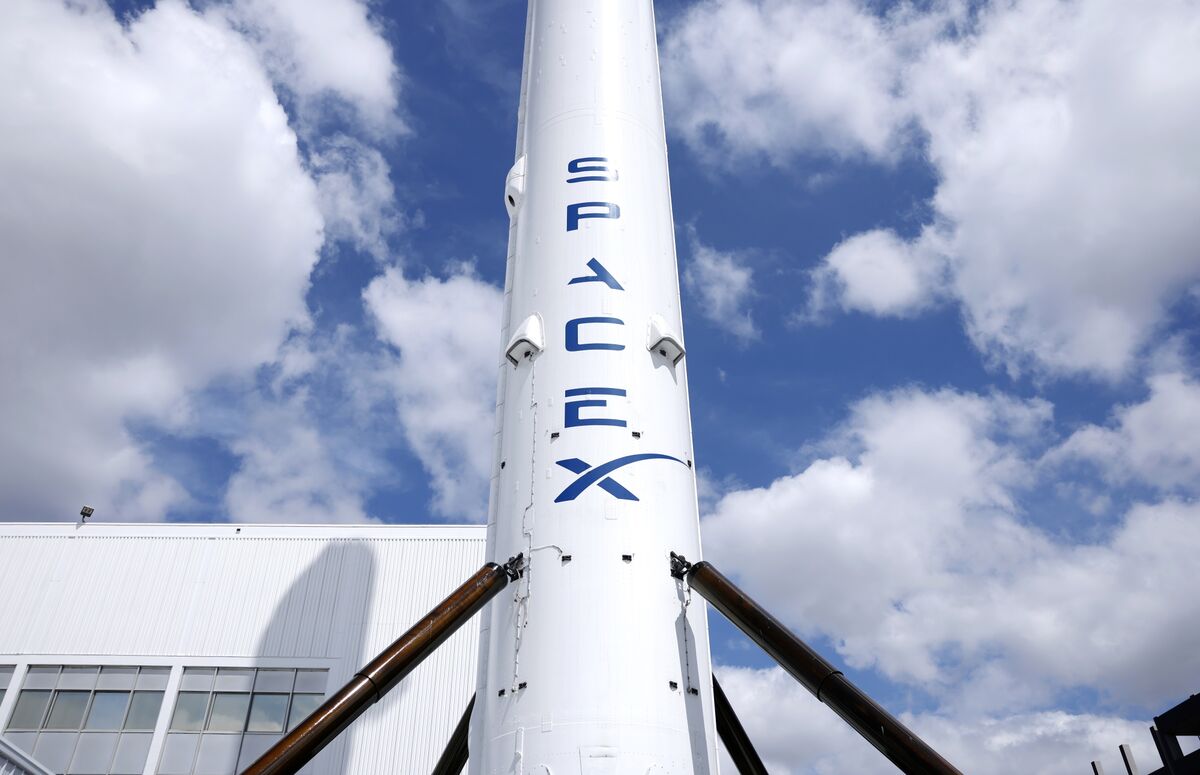
SpaceX IPO Eyes $2T Valuation as Musk Prepares Historic Offering
SpaceX is preparing for what could become the largest initial public offering in history, targeting a staggering $2 trillion valuation as Elon Musk's space exploration company moves closer to going public. Investment bankers are currently hosting critical meetings with potential investors to gauge market appetite for the ambitious offering, according to sources familiar with the matter reported by Bloomberg on April 6, 2026.
The pressure-testing sessions represent a pivotal moment for SpaceX, which has emerged as the dominant force in commercial space transportation and satellite internet services. If successful, the IPO would dwarf previous record-holders and establish SpaceX among the world's most valuable publicly traded companies, potentially exceeding the market capitalizations of tech giants like Apple and Microsoft.
Unprecedented Valuation Targets Space Industry Leadership
The $2 trillion target valuation positions SpaceX at the apex of the global space economy, reflecting the company's multifaceted business model spanning rocket launches, satellite internet, and government contracts. This astronomical figure represents more than double the combined value of traditional aerospace competitors Boeing and Lockheed Martin, underscoring how dramatically SpaceX has reshaped industry dynamics since its founding in 2002.
Investment bankers are emphasizing Musk's unique ability to "sell the dream" of space exploration and colonization, according to Bloomberg's reporting. This narrative-driven approach acknowledges that much of SpaceX's value proposition extends beyond current revenue streams to encompass ambitious long-term projects including Mars colonization missions and global satellite internet coverage through the Starlink constellation.
The valuation discussions come at a time when SpaceX has demonstrated consistent operational excellence, successfully completing over 400 Falcon 9 launches and revolutionizing space transportation through reusable rocket technology. The company's track record includes high-profile achievements such as transporting NASA astronauts to the International Space Station and deploying thousands of Starlink satellites that now provide internet service to millions of users worldwide.
Market analysts suggest that the $2 trillion target reflects investor confidence in SpaceX's diversified revenue portfolio, which includes commercial satellite launches, NASA contracts worth billions of dollars, and the rapidly expanding Starlink internet service. The company's vertical integration strategy, manufacturing most components in-house, has enabled cost efficiencies that traditional aerospace companies have struggled to match.
Investment Banks Navigate Uncharted IPO Territory
The current round of investor meetings represents a crucial phase in IPO preparation, as investment bankers work to build confidence in SpaceX's long-term growth prospects. These sessions typically involve detailed presentations of financial projections, competitive positioning, and strategic roadmaps designed to justify the proposed valuation to institutional investors.
Banking sources indicate that the meetings are focusing heavily on SpaceX's multiple revenue streams and growth trajectories. Starlink alone has generated significant investor interest, with the satellite internet service representing a potentially massive total addressable market estimated in the hundreds of billions of dollars. The service has already demonstrated strong unit economics in developed markets and continues expanding into underserved regions globally.
The IPO timing aligns with favorable market conditions for technology offerings, as investors show renewed appetite for companies with demonstrated revenue growth and clear paths to profitability. SpaceX's consistent launch cadence and expanding customer base provide the operational metrics that institutional investors typically require for large-scale investments.
Investment bankers are also highlighting SpaceX's government contract portfolio, which provides stable, long-term revenue streams. The company holds significant contracts with NASA for lunar missions under the Artemis program, as well as ongoing commitments for International Space Station support and satellite deployments. These government relationships offer revenue predictability that helps offset the inherent risks associated with commercial space ventures.
Market Context and Industry Transformation
SpaceX's IPO preparations unfold against a backdrop of unprecedented growth in the global space economy, which has expanded rapidly as launch costs have declined and new applications for satellite technology have emerged. Industry analysts project the space economy could reach $1 trillion annually by 2030, driven by satellite internet services, space manufacturing, and eventually space tourism.
The company's reusable rocket technology has fundamentally altered space transportation economics, reducing launch costs by an order of magnitude compared to traditional expendable systems. This cost reduction has enabled new business models and made space-based services economically viable for a broader range of applications, from Earth observation to telecommunications.
Starlink's rapid deployment has positioned SpaceX as a major player in global telecommunications, competing directly with traditional internet service providers while serving markets that terrestrial infrastructure cannot economically reach. The constellation now comprises over 6,000 operational satellites and continues expanding to provide global coverage with increasingly higher bandwidth capabilities.
Competitive dynamics in the space industry have intensified as other companies attempt to replicate SpaceX's success. Amazon's Project Kuiper, Blue Origin's lunar ambitions, and various international space agencies represent potential challenges to SpaceX's market position. However, the company's first-mover advantage and proven operational capabilities have established significant competitive moats.
The broader technology sector's evolution toward space-based infrastructure represents a fundamental shift in how digital services are delivered globally. SpaceX's integrated approach, combining launch capabilities with satellite manufacturing and service operations, positions the company to capture value across the entire space economy value chain.
Expert Analysis and Market Implications
Industry experts view SpaceX's IPO as a watershed moment for the commercialization of space technology. "This offering could fundamentally reshape how investors think about space companies," notes aerospace analyst Sarah Chen of Morgan Stanley. "SpaceX has demonstrated that space businesses can achieve the scale and profitability that public market investors expect."
The emphasis on Musk's leadership and vision reflects both an asset and a potential risk for public market investors. While Musk's track record of achieving seemingly impossible goals has driven SpaceX's success, public company shareholders may seek governance structures that reduce dependence on any single individual.
Financial analysts suggest that the $2 trillion valuation implies aggressive growth assumptions for both Starlink subscriber acquisition and launch service expansion. Meeting these expectations will require continued execution excellence and successful expansion into new markets and applications.
The IPO's success could catalyze additional space industry public offerings, as private space companies seek to capitalize on increased investor interest. This potential wave of space IPOs could provide public market investors with diversified exposure to the growing space economy.
What's Next: Timeline and Market Impact
The current investor meetings represent an early phase of IPO preparation, with the actual public offering likely months away pending regulatory approvals and market conditions. SpaceX and its banking partners will use feedback from these sessions to refine their valuation expectations and marketing strategy.
Market observers will be closely watching subscription growth for Starlink services and the success rate of upcoming Falcon Heavy missions as key indicators of SpaceX's operational momentum. The company's progress on Starship development, crucial for future Mars missions and satellite deployments, will also factor into investor sentiment.
If successful at the targeted valuation, the SpaceX IPO could set new benchmarks for technology offerings and demonstrate public market appetite for large-scale, transformative technology investments. The offering's reception may influence other high-profile private companies considering public market debuts.
For more tech news, visit our news section.
Stay Informed About Market-Moving Developments
As SpaceX prepares for this historic IPO, staying informed about major technology and market developments becomes crucial for personal and professional success. The space economy's rapid evolution creates new opportunities and challenges that impact everything from global communications to investment strategies. Understanding these shifts can help you optimize your productivity and make better decisions in an increasingly connected world. Join the Moccet waitlist to stay ahead of the curve with curated insights on technology trends that matter for your health, productivity, and success.