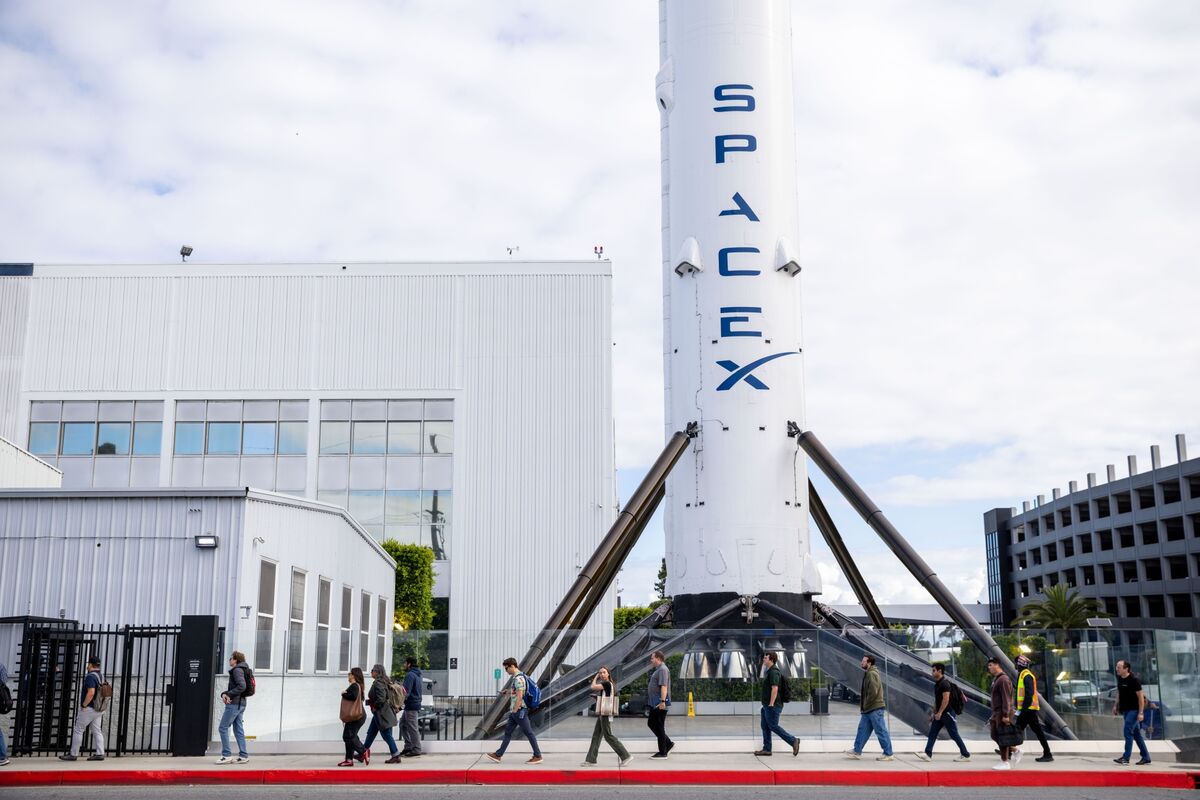
SpaceX Accelerates Employee Share Vesting Ahead of $2T IPO
SpaceX has accelerated the vesting schedule for employee shares to as soon as next week, according to sources familiar with the matter, as the aerospace company prepares for a historic initial public offering (IPO) targeting a valuation exceeding $2 trillion. The decision to fast-track stock vesting represents a strategic move to reward employee loyalty and retain key talent ahead of what could become one of the largest public offerings in corporate history.
Strategic Move Rewards Employee Loyalty Before Historic Public Debut
The acceleration of SpaceX's employee stock vesting schedule signals the company's commitment to sharing its unprecedented success with the workforce that helped build the world's most valuable private space company. Sources close to the matter indicate that employees who were previously waiting months or even years for their equity to vest will now gain access to their shares within days.
This strategic decision comes at a critical juncture for SpaceX as it prepares to transition from private to public ownership. Employee stock option acceleration is a common practice among high-growth companies approaching IPOs, designed to ensure that key personnel remain committed to the organization during the often turbulent period surrounding a public offering.
The timing is particularly significant given SpaceX's current momentum across multiple business verticals. The company's Starlink satellite internet constellation continues expanding globally, while its Falcon Heavy and Starship programs have revolutionized space transportation. Additionally, SpaceX's contracts with NASA for lunar missions and its ambitious Mars colonization timeline have positioned the company at the forefront of humanity's space exploration efforts.
Industry analysts suggest that the accelerated vesting could provide employees with immediate liquidity options, allowing them to monetize years of equity accumulation before the public markets determine SpaceX's trading value. This move also demonstrates confidence in the upcoming IPO's success, as management clearly believes the public valuation will meet or exceed the $2 trillion target.
$2 Trillion Valuation Reflects Space Economy's Explosive Growth
The proposed $2 trillion IPO valuation would catapult SpaceX into an elite group of the world's most valuable public companies, alongside tech giants like Apple, Microsoft, and Google parent company Alphabet. This astronomical figure reflects not only SpaceX's current revenue streams but also the market's confidence in the commercial space sector's long-term growth potential.
SpaceX's valuation encompasses multiple revenue-generating segments that have matured significantly since the company's founding in 2002. The Starlink division alone represents a massive growth opportunity, with thousands of satellites already providing broadband internet service to underserved regions globally. Revenue projections for Starlink suggest it could generate tens of billions annually within the next decade.
The company's launch services division continues dominating the commercial satellite deployment market, with Falcon 9 rockets achieving unprecedented cost efficiency through reusability. SpaceX has successfully landed and reused rocket boosters dozens of times, fundamentally changing the economics of space access and creating sustainable competitive advantages over traditional aerospace companies.
Furthermore, SpaceX's government contracts, including NASA's Artemis lunar program and Department of Defense missions, provide stable, long-term revenue streams that support the valuation multiple. The company's selection as NASA's primary partner for returning humans to the Moon demonstrates institutional confidence in SpaceX's technological capabilities and execution track record.
Market researchers estimate the global space economy could exceed $1 trillion by 2030, driven by satellite communications, Earth observation, space tourism, and eventually asteroid mining and Mars colonization efforts. SpaceX's integrated approach across multiple space industry verticals positions the company to capture significant market share across this expanding ecosystem.
Employee Compensation Strategy Sets New Industry Standards
SpaceX's decision to accelerate equity vesting establishes a new benchmark for employee compensation strategies in high-growth technology companies. The move demonstrates how modern organizations can leverage equity appreciation to attract and retain top talent while aligning employee interests with long-term company success.
The aerospace and technology industries have increasingly relied on stock-based compensation to compete for skilled engineers, scientists, and business professionals. SpaceX's approach to equity management has been particularly aggressive, offering substantial stock grants to employees at various levels throughout the organization. Many early employees who joined when the company was valued at less than $1 billion now stand to realize life-changing wealth from their equity positions.
This compensation philosophy has enabled SpaceX to recruit talent from established aerospace giants like Boeing, Lockheed Martin, and Northrop Grumman, as well as top technology companies including Google, Apple, and Tesla. The promise of meaningful equity participation in a revolutionary company has proven more attractive than traditional salary and benefits packages offered by legacy employers.
The accelerated vesting timeline also addresses employee concerns about liquidity and financial planning. Unlike public company stock options that can be exercised and sold relatively easily, private company equity often remains illiquid for years until an exit event occurs. By moving up vesting dates ahead of the IPO, SpaceX ensures employees can make informed decisions about their equity positions with greater certainty about timing and potential value.
Market Context: Space Industry Investment Surge Continues
SpaceX's IPO preparations occur against the backdrop of unprecedented investment and innovation across the commercial space sector. The space economy has evolved from government-dominated programs to a thriving commercial ecosystem encompassing satellite communications, Earth observation, space tourism, asteroid mining, and interplanetary exploration.
Venture capital and private equity firms have invested billions in space startups over the past decade, recognizing the sector's potential for exponential growth and technological disruption. Companies like Blue Origin, Virgin Galactic, Rocket Lab, and Planet Labs have each carved out niches within the expanding space economy, but none have achieved SpaceX's combination of scale, profitability, and technological advancement.
The timing of SpaceX's public debut is particularly strategic given current market conditions and investor sentiment toward high-growth technology companies. After a period of market volatility in 2024 and 2025, public markets have shown renewed appetite for companies with strong fundamentals, clear paths to profitability, and defensible competitive positions.
SpaceX's revenue diversification across launch services, satellite internet, and government contracts provides the financial stability that public market investors demand from high-valuation companies. Unlike many technology companies that went public during the 2020-2021 boom period, SpaceX has demonstrated consistent revenue growth and operational profitability across multiple business lines.
The company's technological moats, including reusable rocket technology, satellite manufacturing capabilities, and integrated mission control systems, create significant barriers to entry for potential competitors. These advantages should translate into sustained market share and pricing power that justify premium valuation multiples in public markets.
Expert Analysis: Implications for Tech Industry and Space Sector
Technology industry analysts view SpaceX's accelerated vesting decision as a sophisticated talent retention strategy that other high-growth companies will likely emulate. "This move demonstrates how forward-thinking companies can use equity compensation creatively to maintain competitive advantages during critical transition periods," explains Sarah Chen, a senior analyst at TechInsight Research.
The $2 trillion valuation target has generated significant debate among financial analysts about appropriate metrics for valuing space companies. Traditional aerospace valuations based on revenue multiples seem inadequate for companies like SpaceX that operate across multiple high-growth segments with different risk profiles and growth trajectories.
"SpaceX is fundamentally different from traditional aerospace companies because it combines hardware manufacturing, software development, telecommunications infrastructure, and space services into an integrated platform," notes Michael Rodriguez, a space industry consultant and former NASA administrator. "The valuation reflects investors' recognition that SpaceX is building the foundation for humanity's expansion into space."
Investment banking sources suggest that the IPO could attract significant international investment, particularly from sovereign wealth funds and pension systems seeking exposure to next-generation infrastructure and technology. The combination of SpaceX's growth potential and its strategic importance to national security could make it attractive to a broad range of institutional investors.
What's Next: Timeline and Market Impact
With employee share vesting accelerated to next week, SpaceX appears to be moving rapidly toward finalizing IPO preparations. Industry observers expect the company to file preliminary prospectus documents with the Securities and Exchange Commission within the next 60-90 days, followed by investor roadshows and pricing discussions.
The success of SpaceX's public offering could have far-reaching implications for the broader space industry, potentially triggering increased valuations for private space companies and encouraging additional public offerings. Companies like Blue Origin, Relativity Space, and others may accelerate their own IPO timelines if SpaceX demonstrates strong public market demand.
Market participants will be closely watching SpaceX's financial disclosures, particularly revenue breakdowns by business segment and forward guidance for Starlink subscriber growth and launch manifest. These metrics will likely influence how public markets value other space economy companies and shape future investment flows into the sector.
For more tech news, visit our news section.
The Intersection of Space Innovation and Human Performance
SpaceX's revolutionary approach to space exploration mirrors the principles of human optimization and peak performance that drive individual success. Just as SpaceX accelerates innovation through strategic talent management and bold goal-setting, individuals can accelerate their personal and professional growth through optimized health and productivity systems. The same data-driven approach that enables SpaceX to land rockets and deploy satellite constellations can be applied to tracking sleep, nutrition, exercise, and cognitive performance for maximum human potential.
At Moccet, we believe that the future belongs to those who optimize both their technology and their biology. Join the Moccet waitlist to stay ahead of the curve.