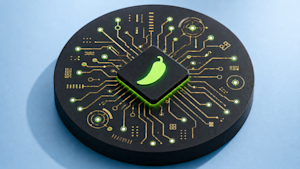
OpenAI and Broadcom Unveil Jalapeño AI Inference Chip
OpenAI and Broadcom Unveil Jalapeño, OpenAI's First Custom AI Inference Chip
On June 24, 2026, OpenAI and Broadcom jointly unveiled Jalapeño, OpenAI's first custom AI inference chip — a purpose-built processor designed specifically for large language model (LLM) inference workloads. The announcement marks a significant strategic shift for OpenAI, moving the company from near-total dependence on third-party GPU hardware toward owning a critical layer of its own AI infrastructure. The chip was developed from scratch in approximately nine months, a timeline that was reportedly accelerated in part by OpenAI's own AI models.
Jalapeño is an ASIC — an Application-Specific Integrated Circuit — which means it is engineered for a narrow set of tasks rather than the broad, flexible workloads that Nvidia's and AMD's general-purpose GPUs handle. That trade-off comes with a meaningful upside: ASICs can be significantly less expensive to operate at scale when their target workload is well-defined. For OpenAI, whose products — including ChatGPT and future agentic applications — generate enormous volumes of inference compute, that cost dynamic matters enormously.
What Jalapeño Is — and What We Don't Yet Know
Jalapeño is designed to handle inference, which is the computational stage that occurs when an AI model is actually running and responding to users — as opposed to training, which is the far more resource-intensive process of building the model in the first place. By targeting inference specifically, OpenAI and Broadcom have optimized the chip for the workloads that directly power ChatGPT and the OpenAI API on a moment-to-moment basis.
The chip's architecture was grounded in OpenAI's deep internal knowledge of LLM fundamentals, including its model roadmap, kernel development, serving systems, and broader infrastructure requirements. That insider perspective — knowing exactly what kinds of operations the chip would need to execute, at what scale, and in what sequence — is precisely the kind of domain knowledge that differentiates a purpose-built ASIC from a general-purpose GPU.
However, there are meaningful limits to what is publicly known about Jalapeño at this stage. As of the announcement date, no publicly released specifications, performance benchmarks, or finalized technical metrics exist. The chip remains in laboratory testing. Claims about its performance relative to Nvidia's offerings, or its real-world cost efficiency at scale, cannot yet be independently verified. Any assessment of Jalapeño's ultimate impact on OpenAI's infrastructure costs or compute capabilities will have to wait for validated data from production deployment.

AI Models Helped Design the AI Chip
One of the more striking details of the Jalapeño announcement is that OpenAI's own AI models were used to help design the chip. This recursive application — using AI to accelerate the engineering of new AI hardware — is consistent with a broader industry trend toward leveraging large language models for complex technical tasks, including code generation, system design, and hardware architecture exploration.
The nine-month development timeline, if accurate, is notably fast for custom silicon. Designing an ASIC from scratch typically involves lengthy cycles of architecture planning, simulation, verification, and fabrication preparation. The use of AI-assisted design tooling may have compressed portions of that timeline, though the precise contribution of OpenAI's models to the chip's development has not been detailed in available public materials.
Broadcom's Role and Its Growing Custom Silicon Client List
Broadcom served as the manufacturing and design partner for Jalapeño, and OpenAI is not the only major AI company in Broadcom's custom silicon portfolio. Broadcom's ASIC accelerator customers also include Alphabet's Google, Meta Platforms, and Anthropic, along with two additional unnamed major clients. This positions Broadcom as a central — if often behind-the-scenes — enabler of the custom chip strategies being pursued across the AI industry.
The partnership model that produced Jalapeño reflects a pattern that has become increasingly common among large technology companies: rather than building chip design capabilities entirely in-house, they collaborate with established semiconductor firms that have the fabrication relationships, engineering depth, and supply chain infrastructure to bring a custom design to production. OpenAI brings the AI-specific architectural knowledge; Broadcom brings the silicon expertise.
OpenAI Joins the Hyperscaler Custom Chip Club
With Jalapeño, OpenAI joins a cohort of technology giants that have developed proprietary AI inference silicon to reduce their dependence on Nvidia and lower the per-query cost of running AI workloads. Google has its Tensor Processing Unit (TPU), Amazon has Trainium, and Microsoft has the Maia chip — each optimized for inference tasks and designed to offer cost advantages over Nvidia's general-purpose GPUs at hyperscale.
The strategic logic is straightforward: at the volumes that companies like OpenAI, Google, and Amazon operate, even modest per-unit savings on inference compute translate into hundreds of millions of dollars annually. Nvidia's GPUs are extraordinarily capable and flexible, but that flexibility comes at a premium. For workloads that are well-understood and highly repetitive — like running the same class of LLM inference billions of times per day — a purpose-built ASIC can potentially deliver the same output at meaningfully lower cost.
That said, ASICs carry their own risks. They are less adaptable than GPUs. If OpenAI's model architectures change significantly — or if the company pivots toward new classes of AI workloads that Jalapeño was not designed to handle — the chip's utility could be constrained. The chip's long-term value will depend heavily on how stable and predictable OpenAI's inference workload profile remains over the years ahead.
Infrastructure Ambitions Beyond the Chip
The Jalapeño announcement does not exist in isolation. It is one piece of a much larger infrastructure buildout that OpenAI appears to be pursuing. Separately, OpenAI is reportedly in advanced talks to lease a proposed 10-gigawatt data center campus in southern Ohio, with a potential construction cost of at least $500 billion. If that project moves forward at anything close to that scale, it would represent one of the largest single infrastructure investments in the history of the technology industry.
A custom inference chip and a massive proprietary data center campus are complementary moves. Owning the silicon means OpenAI could potentially optimize its data center hardware stack end-to-end — specifying not just the servers and networking, but the actual processors running its models. That level of vertical integration is what has historically given companies like Google a structural cost and performance advantage in AI infrastructure, and it is clearly where OpenAI is directionally heading.
Whether OpenAI can execute on both fronts simultaneously — custom silicon and gigawatt-scale data center construction — at the speed the AI industry demands remains an open question. The Ohio campus is still in the talks phase, and Jalapeño is still in laboratory testing. The ambition is evident; the execution is ongoing.
What to Watch For Next
The immediate open questions around Jalapeño are technical: when will performance benchmarks be released, how does the chip compare to Nvidia's inference-focused hardware in real-world deployments, and at what point will it move from laboratory testing into production infrastructure? Until those data points are available, the chip's practical impact on OpenAI's cost structure and compute capacity cannot be meaningfully assessed.
On the broader infrastructure side, the status of the Ohio data center negotiations will be a significant indicator of OpenAI's capital commitments and its timeline for scaling its own physical infrastructure. A deal of that magnitude would signal that OpenAI is moving decisively toward owning its compute stack at a scale that few companies in any industry have attempted.
Broadcom's position as the shared custom silicon partner for Google, Meta, Anthropic, and now OpenAI also bears watching. As demand for custom AI ASICs grows across the industry, Broadcom's ability to serve multiple large clients simultaneously — while keeping each client's designs differentiated and confidential — will be tested.
For now, Jalapeño represents a clear strategic statement: OpenAI is no longer content to be purely a software and model company dependent on third-party hardware. The company is building the infrastructure layer that it believes its long-term ambitions require — and it is using its own AI to help build it.
For more tech news, visit our news section.
Why This Matters for Productivity and the Future of AI Tools
Custom AI inference chips like Jalapeño have direct implications for the responsiveness, availability, and cost of the AI tools that knowledge workers and health-focused professionals rely on every day. Faster, cheaper inference means AI assistants, health monitoring systems, and productivity platforms can operate with lower latency and at greater scale — potentially making these tools more accessible and more effective. As the underlying hardware layer of AI becomes more efficient, the applications built on top of it stand to improve in meaningful, tangible ways. If you want to stay informed as the AI infrastructure landscape evolves and understand what it means for your health and productivity toolkit, join the Moccet waitlist to stay ahead of the curve.