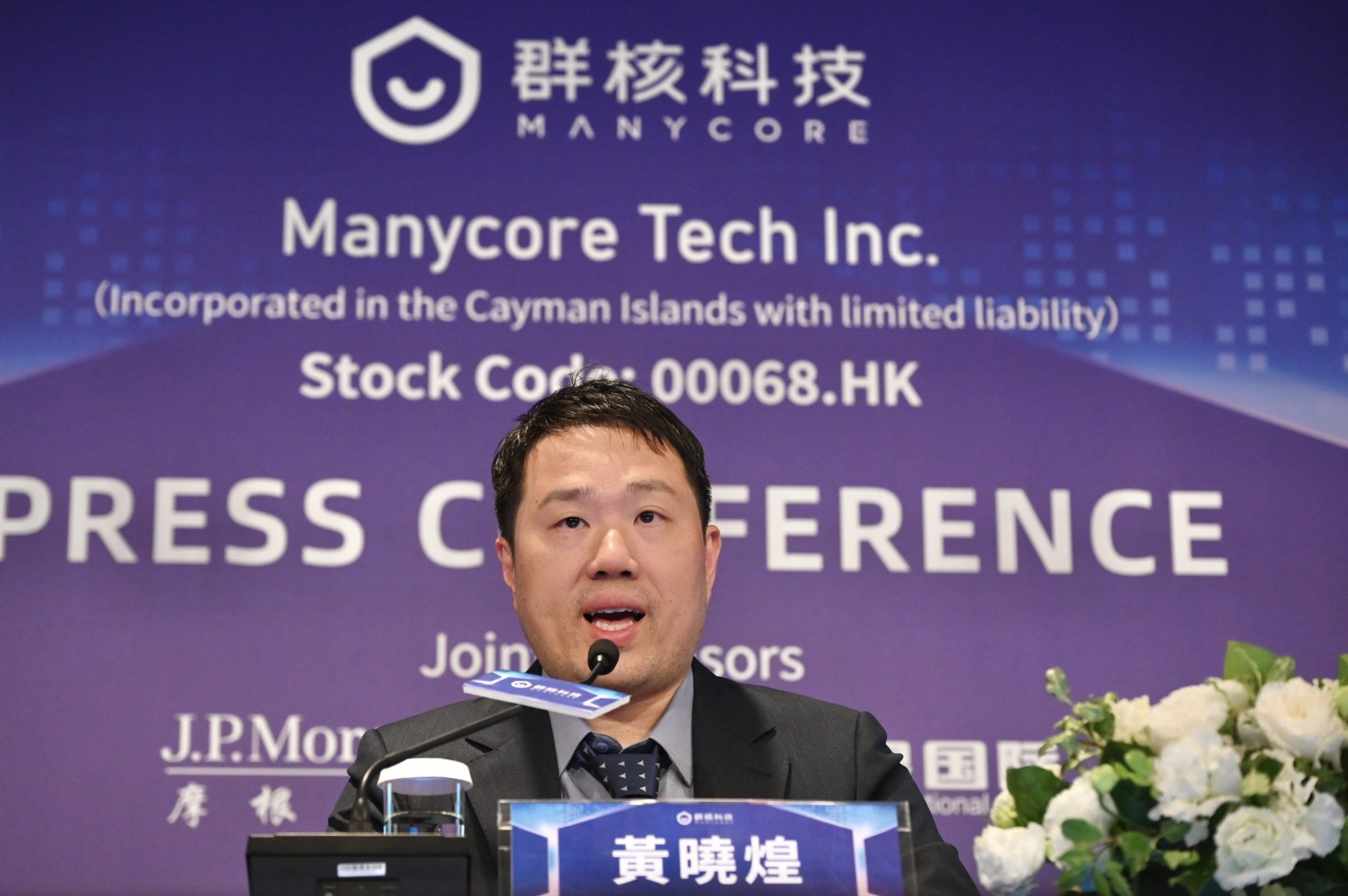
Manycore Tech's $130M IPO Signals Rise of Spatial AI Era
Manycore Tech made its debut on the Hong Kong Stock Exchange today, completing a $130 million initial public offering that marks a significant milestone for China's artificial intelligence sector. The Hangzhou-based company has emerged as the first of the city's so-called 'Little Dragons' to go public, positioning itself at the forefront of what it calls 'spatial intelligence'—the next evolutionary wave in AI development that promises to revolutionize how machines understand and interact with physical environments.
Breaking Ground in Hong Kong's AI Listing Boom
Manycore Tech's successful $130 million IPO contributes to Hong Kong's growing reputation as a premier destination for Chinese AI companies seeking international capital. The exchange has been experiencing unprecedented activity from artificial intelligence firms, as companies leverage Hong Kong's unique position as a bridge between Chinese innovation and global investment markets.
The company's public debut signals a broader transformation in China's tech ecosystem, where a new generation of AI specialists is emerging from cities beyond the traditional powerhouses of Beijing and Shenzhen. Hangzhou, already home to e-commerce giant Alibaba, has been quietly cultivating its own cluster of innovative AI companies, with Manycore leading the charge as the first to achieve public market status.
Industry analysts note that the successful listing comes at a time when investor appetite for AI companies remains strong, despite broader market volatility. The $130 million raise provides Manycore with substantial capital to advance its spatial intelligence technologies and expand its market presence both domestically and internationally.
Hong Kong's stock exchange has been actively courting technology companies through regulatory reforms and streamlined listing processes, making it an attractive alternative to other global exchanges. For Chinese AI companies like Manycore, Hong Kong offers the advantage of accessing international capital while maintaining proximity to their core markets and operations.
Defining the Spatial Intelligence Revolution
While traditional AI has focused primarily on language processing and image recognition, spatial intelligence represents a fundamental leap forward in machine cognition. This emerging field enables artificial intelligence systems to understand three-dimensional spaces, navigate complex environments, and interact with physical objects in ways that mirror human spatial reasoning.
Manycore's focus on spatial intelligence positions the company at the intersection of multiple high-growth markets, including autonomous vehicles, robotics, augmented reality, and smart city infrastructure. Unlike conventional AI that processes discrete data points, spatial intelligence systems must integrate multiple sensory inputs in real-time to build comprehensive understanding of dynamic environments.
The applications for spatial intelligence extend far beyond consumer technologies. In manufacturing, these systems can optimize facility layouts and coordinate robotic workflows with unprecedented precision. Healthcare facilities could leverage spatial AI to improve patient flow and resource allocation, while logistics companies might use it to revolutionize warehouse operations and delivery systems.
For Manycore, the development of spatial intelligence technologies represents years of research and development investment. The company has assembled teams of specialists in computer vision, sensor fusion, and machine learning to tackle the complex challenges of teaching machines to understand space as humans do naturally.
The timing of Manycore's public debut coincides with growing recognition that spatial intelligence could unlock the next phase of AI adoption across industries. As organizations seek to deploy AI systems in physical environments rather than purely digital contexts, companies like Manycore are positioned to capture significant value from this technological transition.
Hangzhou's Emerging 'Little Dragons' Ecosystem
Manycore's designation as the first of Hangzhou's 'Little Dragons' to achieve public status highlights the city's evolution into a significant AI innovation hub. The term appears to reference a new generation of Chinese AI companies that are following successful growth trajectories while remaining smaller and more specialized than established tech giants.
Hangzhou's AI ecosystem has benefited from several structural advantages, including proximity to top-tier universities, access to talent from established tech companies, and supportive local government policies. The city has also leveraged its existing strengths in e-commerce and digital payments to create natural testing grounds for new AI applications.
The emergence of multiple 'Little Dragons' in Hangzhou suggests a maturing AI landscape where specialized companies can thrive alongside larger competitors. These firms often focus on specific technological niches or industry applications, allowing them to develop deep expertise and establish market leadership in targeted segments.
For investors and industry observers, Manycore's successful IPO validates the potential of Hangzhou's AI cluster and may encourage additional companies in the region to pursue public listings. This could create a virtuous cycle of investment, talent attraction, and innovation that further strengthens the city's position in China's AI hierarchy.
The success of Hangzhou's 'Little Dragons' also reflects broader trends in AI development, where breakthrough innovations increasingly come from focused teams working on specific technical challenges rather than general-purpose research initiatives. This specialization allows companies like Manycore to achieve technical leadership while building sustainable competitive advantages.
Industry Context and Market Implications
Manycore Tech's public debut occurs within a rapidly evolving artificial intelligence landscape where spatial intelligence is gaining recognition as a critical capability for next-generation applications. The global AI market continues to expand at unprecedented rates, with spatial computing and environmental understanding representing some of the fastest-growing segments.
The company's $130 million IPO demonstrates strong investor confidence in specialized AI technologies, particularly those with clear commercial applications across multiple industries. This contrasts with earlier AI investment cycles that often focused on general-purpose technologies without clear paths to monetization.
Hong Kong's emergence as a preferred listing destination for Chinese AI companies reflects broader geopolitical and economic factors affecting technology companies' access to international capital markets. The exchange's success in attracting AI firms has implications for its competitive position relative to other global financial centers.
The spatial intelligence market that Manycore is targeting represents a convergence of several technological trends, including advances in sensor technology, improvements in processing power, and the proliferation of connected devices. These factors create favorable conditions for companies that can successfully integrate spatial understanding into practical applications.
From a competitive perspective, Manycore's early focus on spatial intelligence could provide significant first-mover advantages as the technology gains broader adoption. However, the company will likely face increasing competition from both established tech giants and other specialized AI firms as the market opportunity becomes more apparent.
The success of Manycore's IPO may also influence how other AI companies approach public listings, particularly in terms of timing, venue selection, and market positioning. Companies with specialized AI technologies may find increased investor receptivity following Manycore's successful debut.
Expert Analysis and Industry Perspectives
Technology analysts view Manycore's successful IPO as validation of the growing importance of specialized AI capabilities in an increasingly competitive market. "Spatial intelligence represents a natural evolution from current AI applications toward systems that can understand and interact with the physical world," notes one industry expert. "Companies that can master this technology early will have significant advantages as industries seek to deploy AI in real-world environments."
Investment professionals point to the strong reception of Manycore's offering as evidence of continued investor appetite for AI companies with clear technological differentiation and commercial applications. The $130 million raise provides substantial resources for research and development while demonstrating market confidence in the spatial intelligence opportunity.
Regional development experts highlight Manycore's success as confirmation of Hangzhou's emergence as a significant AI innovation center. The city's ability to nurture companies from startup stage through public listing suggests a maturing ecosystem that can compete effectively with established tech hubs.
From a technological perspective, spatial intelligence is seen as addressing fundamental limitations of current AI systems that struggle to understand context and environment. This capability gap has limited AI adoption in many physical industries, creating substantial market opportunities for companies that can bridge this divide effectively.
What's Next for Spatial Intelligence and Market Development
Looking ahead, Manycore's successful public debut is likely to accelerate broader market interest in spatial intelligence technologies and applications. The company's access to public market capital should enable expanded research and development efforts while supporting commercial deployment of its technologies across target markets.
Industry observers expect to see increased competition in the spatial intelligence space as Manycore's success demonstrates the commercial viability of these technologies. This could lead to accelerated innovation cycles and faster development of practical applications that benefit end users and businesses.
The success of Hangzhou's first 'Little Dragon' IPO may encourage other AI companies in the region to pursue public listings, potentially creating a cluster effect that attracts additional investment and talent to the city's AI ecosystem. This could strengthen Hangzhou's position as a major AI innovation center.
For the broader AI industry, Manycore's focus on spatial intelligence highlights the continued evolution toward more specialized and application-specific artificial intelligence capabilities. This trend suggests that future AI development may increasingly focus on solving specific technical challenges rather than pursuing general-purpose intelligence.
For more tech news, visit our news section.
Leveraging AI Advances for Personal Optimization
The emergence of spatial intelligence technologies like those developed by Manycore has profound implications for personal health and productivity optimization. As AI systems become capable of understanding and interacting with physical environments, they open new possibilities for creating personalized spaces that adapt to individual needs and behaviors. Smart environments could monitor stress levels, optimize lighting and temperature for peak performance, and suggest workspace arrangements that enhance focus and creativity. These advances in spatial AI align perfectly with the growing recognition that our physical environment plays a crucial role in determining our cognitive performance, emotional well-being, and overall productivity. Join the Moccet waitlist to stay ahead of the curve.