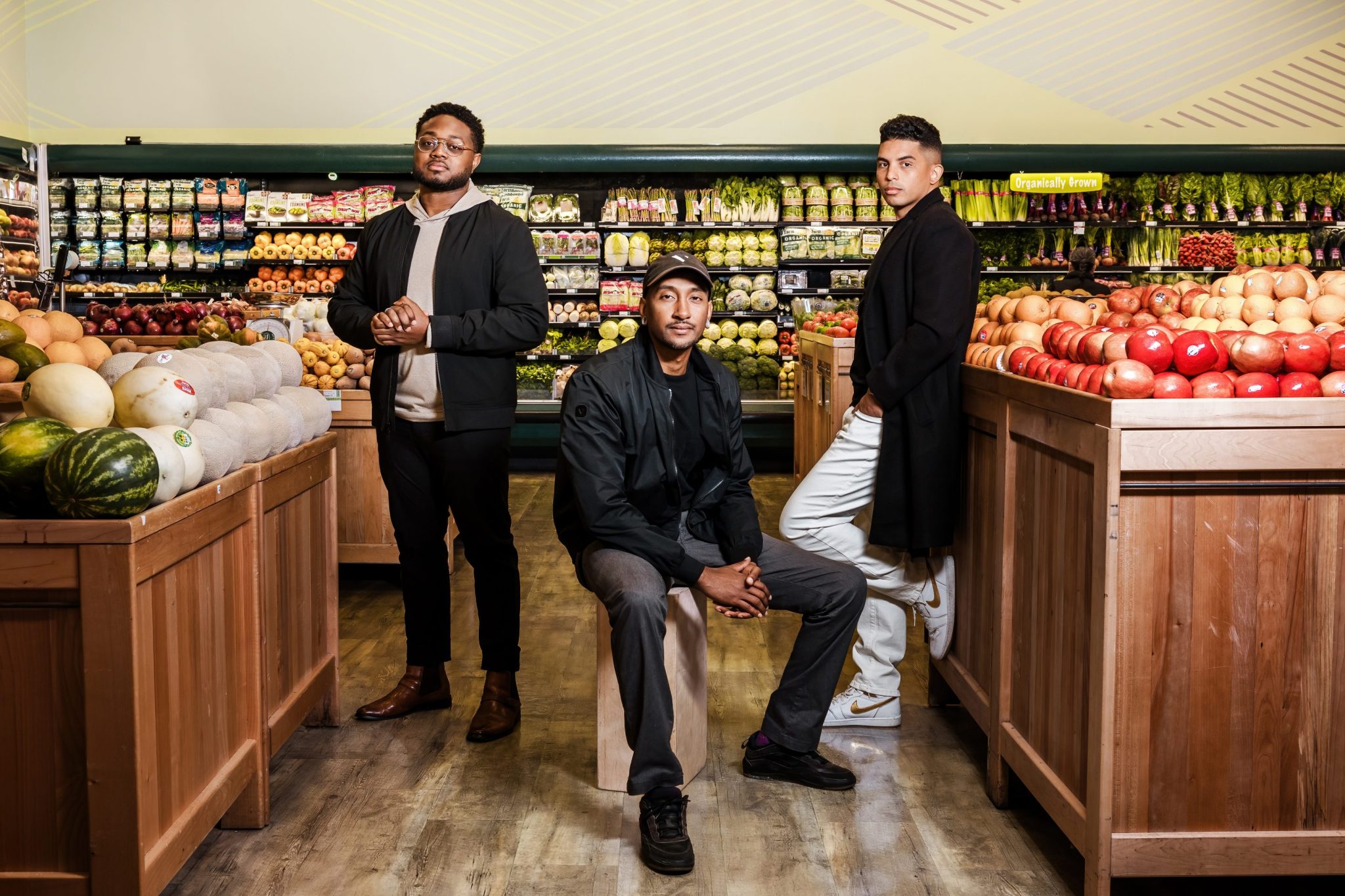
Vori Raises $22M to Bring AI to Independent Grocery Stores
AI Grocery Startup Vori Raises $22 Million to Help Independent Retailers Compete With Walmart and Amazon
San Francisco-based AI startup Vori has raised a $22 million Series B to accelerate the digitization of independent and regional grocery stores — an industry that, in many cases, still runs on fax machines and paper invoices. The round, first reported by Fortune on May 5, 2026, was led by Cherryrock Capital, with participation from Greylock Partners and The Factory, the fund associated with Stanford AI researcher Chris Ré. Since launching its current platform in January 2024, Vori says it has processed more than $500 million in payments across 55 cities and served more than 1 million consumers.
What Vori Does — and Why It's Targeting Independent Grocers
Vori describes itself as "the self-driving operating system for supermarkets." Its platform unifies point-of-sale, payments, inventory management, back-office operations, price monitoring, and supplier invoice reconciliation into a single system designed for operators who have historically had to stitch together a patchwork of disconnected tools.
The company was founded in 2019 by Stanford University alumni and is co-founded and led by CEO Brandon Hill, a third-generation grocer whose grandparents ran a small store in Oklahoma. According to Vori's Series A press release, the company's team has over 100 years of combined grocery experience. Prior investors include Greylock, Y Combinator, Village Global, and South Park Commons, alongside grocery industry veterans from Safeway and Albertsons and co-founders from Instacart, DoorDash, and Twitch.
The company's target market is vast. According to Fortune's coverage, the U.S. food retail market — encompassing supermarkets, grocery stores, food marts, and specialty shops — is worth $1.5 trillion, more than restaurants and hotels combined. FMI Food Industry data cited by Fortune puts the number of U.S. supermarkets at 45,575, with average weekly sales of $711,806 per store. Yet Walmart and Amazon together control roughly a quarter of the U.S. grocery market, with Amazon having made a $13.7 billion acquisition of Whole Foods. Independent grocers, representing an estimated 75% of U.S. grocery operators, have largely been left to fend for themselves.
As Hill put it in a post tracked by NextPlay Substack: "The grocery industry is one of the most under-digitized industries on earth." He has also noted that "wages have stagnated, margins have compressed, and scale retailers [like Walmart] wield a significant pricing and technology advantage."

How the $22 Million Series B Will Be Deployed
According to Fortune, the new Series B capital will be directed at bringing AI deeper into an industry that still relies heavily on manual processes. Vori's payments-first revenue model is central to its go-to-market strategy: payments account for roughly 60% to 70% of Vori's revenue, a structure that CEO Brandon Hill says helps keep software and hardware costs lower for store operators.
The results reported so far are notable. Since January 2024, Vori says its platform has processed more than $500 million in payments. According to data from Brandon Hill's LinkedIn and the NextPlay Substack, in 2025 alone grocers using Vori processed over $355 million in annualized payments and generated more than $22 million in added net sales. Vori's AI also auto-detected more than 577,000 supplier cost changes to help protect retail margins — a capability that speaks directly to the margin pressure independent operators face daily.
Hill has pointed to the structural complexity of grocery as a core reason why AI is particularly valuable in this sector. "The number of SKUs in a grocery store is an order of magnitude higher than that of a restaurant," he told Fortune. The operational burden that complexity creates is one the company is explicitly built to reduce. "It's about, how do you fill gaps so you don't have to spend 60 to 70 percent of your time moving data from left to right?" Hill said.
The company expects to grow sevenfold in 2026 and again in 2027, according to Fortune's reporting on Hill's projections — though such forward-looking targets carry the usual uncertainty inherent to early-stage companies.
The Backers: Cherryrock Capital, Greylock, and The Factory
Leading the Series B is Cherryrock Capital, the venture firm founded in 2023 by former TaskRabbit CEO Stacy Brown-Philpot. Cherryrock closed its debut fund at $172 million in February 2025, according to TechCrunch. That fund's limited partners included Goldman Sachs Asset Management, MassMutual, Top Tier Capital Partners, and Melinda Gates' Pivotal Ventures, per TechCrunch's reporting. Bloomberg and AfroTech separately reported that Fund I investors also include Goldman Sachs, JPMorgan Chase, LinkedIn co-founder Reid Hoffman, and former Meta COO Sheryl Sandberg.
Also participating in the Vori Series B are Greylock Partners, a repeat investor from Vori's earlier rounds, and The Factory, the fund associated with Stanford AI researcher Chris Ré. The Factory also led Vori's $10 million Series A in August 2022, which additionally included participation from Greylock, E2JDJ, MKT1, and Mollie Stone's Markets.
Why This Matters: The Broader Push to Digitize Grocery
The timing of Vori's raise reflects mounting urgency in the grocery sector. A joint April 2026 report from FMI and NielsenIQ found that online grocery sales contributed close to 75% of total grocery dollar growth in 2025. Total U.S. online grocery sales are projected to reach $452 billion by 2028, according to that same FMI/NielsenIQ report. For independent operators without the technology infrastructure to compete in an increasingly digital retail environment, the gap between them and large chains is widening.
The operational challenges go beyond e-commerce. Fortune's reporting on the Vori raise noted that independent grocery stores face a 39% store-level employee turnover rate — a figure that compounds the difficulty of managing complex, data-intensive operations with limited staff and resources.
Vori's pitch to these operators is straightforward: a unified, AI-powered platform that handles the operational complexity so store owners can focus on serving their communities. Hill has framed the company's mission in pointed terms: "I'm proud to say we are arming the rebels by providing food entrepreneurs with affordable and agnostic technology that streamlines their businesses, allowing them to stay competitive."
Whether that mission can scale to match the ambitions of its Series B is an open question. Vori operates in a competitive landscape that includes both legacy grocery technology vendors and a growing field of retail AI startups. But with $500 million in processed payments, a payments-led revenue model, and now $22 million in fresh capital from backers with significant resources and networks, the company has built a more substantial foundation than most early-stage grocery tech players can claim.
What's Next for Vori
With the Series B closed, Vori's immediate priorities are expanding its platform's AI capabilities and reaching more of the independent grocery operators that currently lack access to modern retail technology. The company's stated growth expectations — sevenfold in both 2026 and 2027, per Fortune's reporting — suggest an aggressive expansion plan, though such projections are inherently forward-looking and subject to market conditions.
The broader structural forces favoring Vori's expansion appear durable: a $1.5 trillion market still largely running on manual processes, accelerating e-commerce adoption putting pressure on operators to modernize, and dominant players like Walmart and Amazon continuing to tighten their grip on the market. For the tens of thousands of independent grocery operators across the U.S., the question of whether AI can level the playing field is no longer theoretical — and Vori is betting $22 million that the answer is yes.
For more tech news, visit our news section.
Why This Story Matters for Health and Productivity
Access to well-stocked, efficiently run independent grocery stores has direct implications for community health — from food access and fresh produce availability to the stability of local food ecosystems. As AI continues to reshape how everyday industries operate, staying informed about the tools and platforms redefining work and wellness is part of living and performing at your best. Join the Moccet waitlist to stay ahead of the curve.