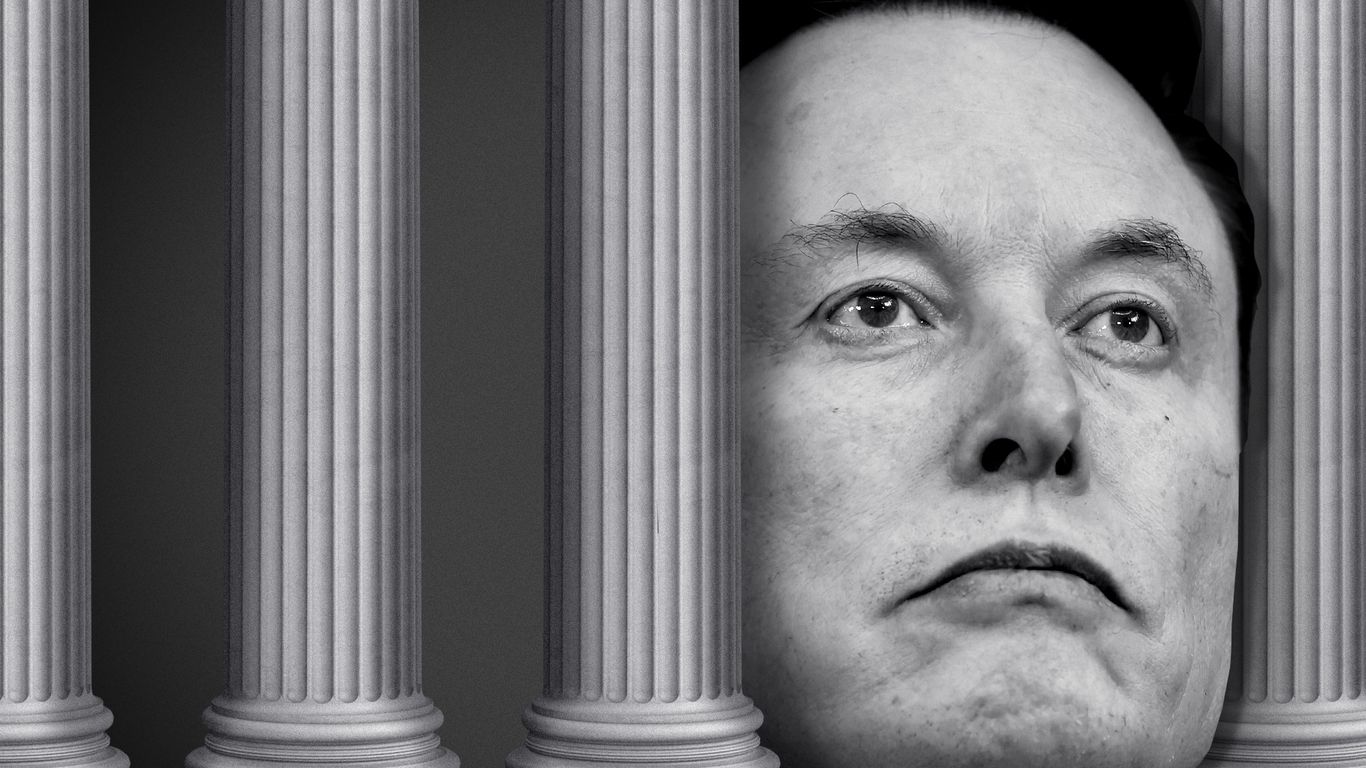
Elon gets his day in trial against Sam Altman and OpenAI
```json { "title": "Elon Musk Takes the Stand in OpenAI Trial Against Sam Altman", "metaDescription": "Elon Musk testified in federal court on April 28, 2026, in his landmark lawsuit against OpenAI, Sam Altman, and Microsoft over the company's nonprofit origins.", "content": "<h2>Elon Musk Takes the Stand in Landmark OpenAI Trial Against Sam Altman</h2>\n\n<p>Elon Musk took the witness stand on April 28, 2026, at the Ronald V. Dellums US Courthouse in Oakland, California, becoming the first witness called to testify in his high-stakes civil lawsuit against OpenAI, CEO Sam Altman, President Greg Brockman, and Microsoft. The trial, which formally opened with a nine-person jury seated the previous day, centers on two remaining legal claims — unjust enrichment and breach of charitable trust — and could ultimately reshape the governance and future of one of the most valuable private companies on earth.</p>\n\n<p>The proceedings are presided over by U.S. District Judge Yvonne Gonzalez Rogers. Notably, the jury's verdict will be advisory, meaning Judge Gonzalez Rogers will make the final binding decision. The trial is structured in two phases: a liability phase in which the jury participates to determine whether wrongdoing occurred, and a remedies phase, conducted without the jury, to determine consequences if liability is established.</p>\n\n<h2>What Musk Is Alleging — and What He's Asking For</h2>\n\n<p>Musk filed his lawsuit in August 2024, originally asserting 26 separate claims. By the time the trial began, only two survived pre-trial motions: unjust enrichment and breach of charitable trust. At the core of his argument is the assertion that OpenAI's transformation from a charity-backed nonprofit into a for-profit enterprise — now valued at $852 billion according to court documents — violated the founding mission he says he helped fund and establish.</p>\n\n<p>Musk co-founded OpenAI alongside Sam Altman and others in 2015 as a nonprofit dedicated to developing artificial intelligence safely and for the broad benefit of humanity. According to court documents cited in the proceedings, Musk was the organization's largest early individual financial backer, contributing more than $44 million to the startup. His attorneys stated he contributed approximately $38 million to the nonprofit over roughly five years.</p>\n\n<p>He departed OpenAI's board in 2018 amid a reported power struggle over control of the organization. A year after his exit, OpenAI created a for-profit subsidiary. In 2025, the company restructured further into a for-profit public benefit corporation operating under the OpenAI nonprofit foundation.</p>\n\n<p>Musk's lawyers stated in January 2026 that he should receive up to $134 billion in what they characterized as \"wrongful gains\" from OpenAI and Microsoft, though Musk has since indicated he wants those funds redirected back into OpenAI's charitable arm rather than paid to him personally. He is also seeking the ouster of Altman as a director of OpenAI's nonprofit board and the removal of both Altman and Brockman as officers of the for-profit company.</p>\n\n<p>Testifying directly about his core argument, Musk framed the case in stark terms: <strong>"Fundamentally, I think they're going to try to make this lawsuit...very complicated, but it's actually very simple. Which is that it's not OK to steal a charity."</strong></p>\n\n<h2>Opening Salvos: Competing Narratives in Court</h2>\n\n<p>Before Musk took the stand, attorneys on both sides delivered sharply contrasting opening statements that set the tone for what promises to be a contentious three-week trial.</p>\n\n<p>Musk's lead attorney, Steven Molo, opened by placing responsibility for OpenAI's existence squarely on his client's shoulders and accusing the defendants of betraying that legacy. <strong>"Ladies and gentlemen, we are here today because the defendants in this case stole a charity,"</strong> Molo told the jury. He also stated: <strong>"Without Elon Musk there would be no OpenAI, pure and simple."</strong> Molo noted that Microsoft initially invested $2 billion in OpenAI, framing the tech giant's deep financial involvement as central to the alleged breach.</p>\n\n<p>OpenAI's lead attorney, William Savitt, pushed back forcefully, offering a counter-narrative that characterized Musk's lawsuit as motivated not by principle but by personal ambition and competitive jealousy. <strong>"We are here because Mr. Musk didn't get his way with OpenAI,"</strong> Savitt told the jury. He went further, arguing: <strong>"Musk never cared whether OpenAI was a not-for-profit... He never cared about AI safety. What he cared about was Elon Musk on top."</strong> In a separate statement, Savitt added: <strong>"What he cares about is Elon Musk being at the top."</strong></p>\n\n<p>OpenAI also issued a formal statement characterizing the litigation as: <strong>"This lawsuit has always been a baseless and jealous bid to derail a competitor."</strong></p>\n\n<h2>A Judge's Warning and Social Media Tensions</h2>\n\n<p>The trial did not begin without friction. Before the jury was brought into the courtroom on Tuesday, Judge Gonzalez Rogers reportedly scolded Musk for his recent social media posts about the trial and threatened to impose a gag order. Musk agreed to limit his posts going forward. Altman and Brockman similarly agreed to curtail their own public commentary on the proceedings.</p>\n\n<p>Microsoft's legal team also used opening arguments to raise a procedural defense, with Microsoft's lawyer Russell Cohen arguing that Musk's suit exceeded the statute of limitations — pointing to a September 2020 post on X in which Musk himself wrote that \"OpenAI is essentially captured by Microsoft.\"</p>\n\n<h2>Why This Trial Matters Beyond the Courtroom</h2>\n\n<p>The stakes of this litigation extend far beyond the personal dispute between two of Silicon Valley's most prominent figures. OpenAI, according to court documents, now has nearly 1 billion weekly active users and is valued at $852 billion. The company recently closed a $122 billion funding round, and according to The Wall Street Journal, it is planning an initial public offering potentially later in 2026.</p>\n\n<p>Meanwhile, the trial arrives at a moment of extraordinary financial convergence. Both Musk and OpenAI are positioning for major capital market events: Musk is preparing to take SpaceX public, while OpenAI is gearing up for its own IPO. According to CNBC, SpaceX and OpenAI combined are valued at over $2 trillion on the private market — a figure that underscores why the outcome of this case carries implications well beyond the legal question of charitable trust.</p>\n\n<p>A finding of liability against OpenAI could impose legal constraints on its for-profit structure, complicate its planned IPO, and potentially force changes to its leadership. Conversely, a verdict in OpenAI's favor would validate the company's transformation and likely accelerate its path to public markets.</p>\n\n<p>It is also worth noting that Musk founded his own competing AI company, xAI, in 2023. OpenAI and its supporters have argued that this competitive dynamic — not altruistic concern for the original nonprofit's mission — is the true driver of the lawsuit. Whether jurors and, ultimately, Judge Gonzalez Rogers find that argument persuasive will be central to how the case resolves.</p>\n\n<h2>Who Will Testify — and What Comes Next</h2>\n\n<p>Musk was the first witness called to testify, but he is not expected to be the last prominent figure to take the stand. According to NPR, expected witnesses include Sam Altman, Greg Brockman, and Microsoft CEO Satya Nadella. Musk's expert witnesses include Stuart J. Russell, an AI researcher and science professor at UC Berkeley, and David M. Schizer, a Columbia Law professor, dean emeritus, and tax scholar.</p>\n\n<p>Judge Gonzalez Rogers has stated she wants jurors to begin deliberations on the defendants' liability by May 12, 2026. If the jury finds liability, the case will move to the remedies phase — conducted without the jury — in which the court will determine what consequences, if any, OpenAI and the named defendants must face.</p>\n\n<p>The trial is scheduled to last approximately three weeks in total. The advisory nature of the jury's verdict means that even after deliberations conclude, the final word will rest with Judge Gonzalez Rogers herself.</p>\n\n<p>For more tech news, visit our <a href=\"/news\">news section</a>.</p>\n\n<h2>What This Means for Your Productivity and Decision-Making</h2>\n\n<p>The outcome of the Musk v. Altman trial will directly influence which AI tools reach consumers, on what terms, and under whose control — making it one of the most consequential legal proceedings for anyone who relies on AI-powered platforms to work, think, and make decisions. At Moccet, we track the developments shaping the future of AI and productivity so you can make informed choices about the tools you use. <a href=\"/#waitlist\">Join the Moccet waitlist to stay ahead of the curve.</a></p>", "excerpt": "Elon Musk took the witness stand on April 28, 2026, in federal court in Oakland, becoming the first witness in his civil lawsuit against OpenAI, Sam Altman, Greg Brockman, and Microsoft. The trial centers on claims of unjust enrichment and breach of charitable trust, with Musk alleging that OpenAI's transformation into a for-profit enterprise valued at $852 billion violated its founding nonprofit mission. A verdict could reshape OpenAI's governance, leadership, and its path toward a planned IPO.", "keywords": ["Elon Musk OpenAI trial", "Musk vs Altman lawsuit", "OpenAI nonprofit lawsuit", "OpenAI Sam Altman court", "OpenAI breach of charitable trust"], "slug": "elon-musk-openai-trial-sam-altman-testimony-2026" } ```