ChatGPT Images 2.0: OpenAI's Revolutionary Visual AI Update
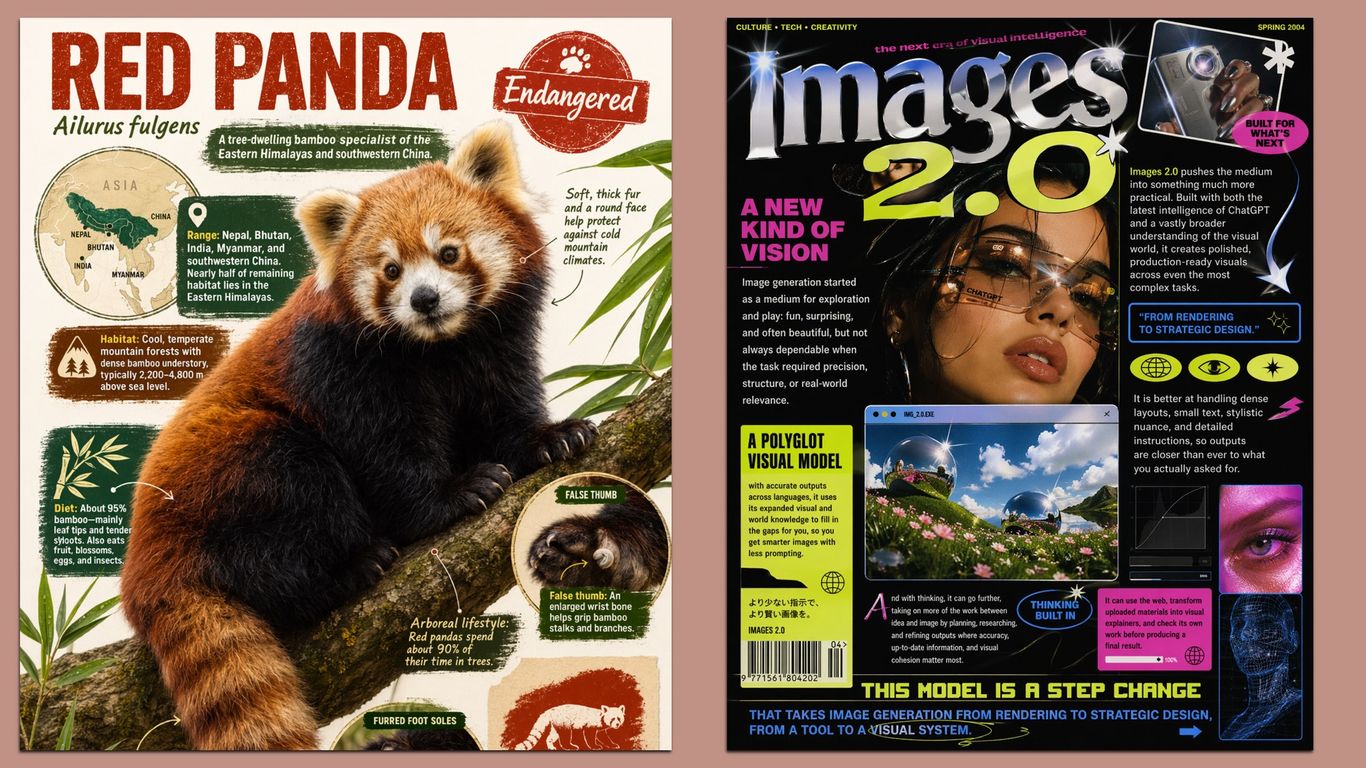
OpenAI announced ChatGPT Images 2.0 on Tuesday, April 21, 2026, marking a significant leap forward in artificial intelligence's visual capabilities. The new image engine promises enhanced text rendering, support for complex visual requests, and introduces a groundbreaking "thinking" mode with built-in reasoning capabilities. This update positions ChatGPT at the forefront of the visual AI revolution, potentially reshaping how millions interact with artificial intelligence daily.
Revolutionary Features Define ChatGPT Images 2.0
The ChatGPT Images 2.0 update introduces several game-changing features that set it apart from previous iterations and competitor offerings. The most notable advancement lies in its sophisticated text rendering capabilities, addressing one of the most persistent challenges in AI-generated imagery. Previous versions of image generation models, including ChatGPT's earlier iterations, struggled with accurate text placement, spelling, and typography integration within visual content.
The new engine's ability to handle complex requests represents another significant milestone. Unlike earlier models that required simplified or highly specific prompts, ChatGPT Images 2.0 can interpret nuanced, multi-layered instructions with remarkable accuracy. Users can now request images that incorporate multiple elements, specific styling requirements, and intricate compositional demands without the typical trial-and-error process that characterized earlier AI image generation.
Perhaps most intriguingly, the update introduces support for a wide range of aspect ratios, breaking free from the square format limitations that have historically constrained AI image generation. This flexibility opens new possibilities for content creators, marketers, and professionals who need images tailored for specific platforms, from Instagram stories to wide-screen presentations.
The standard version of ChatGPT Images 2.0 will be available to all users, democratizing access to advanced AI image generation. However, the premium "thinking" mode, which incorporates built-in reasoning capabilities, represents a quantum leap in AI sophistication. This mode allows the AI to analyze requests, consider multiple approaches, and iteratively refine its output based on logical reasoning processes that mirror human creative thinking.
Technical Breakthroughs Behind the Visual Revolution
The technological foundation of ChatGPT Images 2.0 likely represents years of research and development in computer vision, natural language processing, and machine learning. While OpenAI has not released detailed technical specifications, the improvements suggest significant advances in several key areas of AI development.
The enhanced text rendering capability indicates substantial progress in optical character recognition (OCR) and text-image synthesis. Traditional image generation models have struggled with text because they treat it as visual elements rather than linguistic content. The new system appears to bridge this gap, understanding text both as visual design elements and meaningful content, resulting in more coherent and purposeful text integration.
The "thinking" mode represents a particularly sophisticated development, suggesting the integration of chain-of-thought reasoning into visual generation processes. This approach allows the AI to break down complex requests into manageable components, consider multiple solutions, and select optimal approaches based on the specific requirements of each request. The reasoning process likely involves multiple evaluation cycles, where the AI generates preliminary concepts, evaluates them against the original request, and refines the approach accordingly.
The support for multiple aspect ratios requires advanced understanding of composition principles across different formats. The AI must understand how visual elements work differently in portrait versus landscape orientations, how to maintain visual balance across various dimensions, and how to adapt creative concepts to suit different presentation contexts. This level of compositional sophistication suggests significant advances in the AI's understanding of visual design principles.
Market Impact and Competitive Implications
The release of ChatGPT Images 2.0 arrives at a critical juncture in the AI industry, where visual generation capabilities have become a key differentiator among competing platforms. The timing of this announcement in April 2026 positions OpenAI strategically against competitors who have been rapidly advancing their own visual AI capabilities throughout the year.
Industry analysts predict that major updates like ChatGPT Images 2.0 often trigger viral adoption moments, leading to significant spikes in app downloads and user engagement. The phenomenon reflects the public's fascination with tangible AI capabilities that produce immediate, shareable results. Visual content naturally lends itself to social sharing, potentially amplifying the reach and impact of this update far beyond OpenAI's existing user base.
The update's implications extend across numerous industries and use cases. Content creators, who have increasingly relied on AI-generated imagery for social media, marketing materials, and creative projects, will benefit from the enhanced quality and flexibility. The improved text rendering capabilities alone could revolutionize how businesses create promotional materials, potentially reducing reliance on traditional graphic design tools and processes.
Educational applications also stand to benefit significantly. The ability to generate custom visual aids, diagrams, and illustrations with embedded text could transform how educators create teaching materials. The "thinking" mode's reasoning capabilities might enable more sophisticated educational visualizations that adapt to specific learning objectives and student needs.
Industry Context and Technological Trajectory
The ChatGPT Images 2.0 announcement represents the latest milestone in the rapidly evolving landscape of artificial intelligence visual generation. Since the breakthrough success of models like DALL-E, Midjourney, and Stable Diffusion in the early 2020s, the field has experienced exponential growth in both capability and adoption.
The evolution from simple text-to-image generation to sophisticated visual reasoning systems reflects broader trends in AI development. The integration of reasoning capabilities into image generation parallels similar developments in text-based AI, where models have evolved from simple completion tasks to complex reasoning and analysis capabilities. This convergence suggests we're approaching a new era of multimodal AI systems that can seamlessly integrate visual, textual, and logical processing.
The business implications of advanced visual AI extend far beyond individual creativity tools. Industries ranging from advertising and marketing to architecture and product design are experiencing fundamental shifts in how visual content is conceptualized, created, and refined. The ability to rapidly prototype visual concepts, explore alternative designs, and iterate on creative ideas at unprecedented speed is reshaping creative workflows across multiple sectors.
From a technological standpoint, the advancement in AI image generation capabilities reflects broader progress in computational power, algorithm efficiency, and training methodologies. The ability to process complex visual requests and maintain quality across various aspect ratios requires substantial computational resources and sophisticated optimization techniques. OpenAI's success in delivering these capabilities suggests significant advances in making powerful AI accessible to mainstream users.
The democratization aspect of ChatGPT Images 2.0, with standard features available to all users, reflects a strategic approach to AI deployment that balances accessibility with premium offerings. This model has become increasingly common in the AI industry, allowing companies to build large user bases while monetizing advanced features for professional and power users.
Expert Analysis and Industry Response
The release of ChatGPT Images 2.0 has generated significant attention from AI researchers, industry analysts, and creative professionals. The update's emphasis on reasoning capabilities represents what many experts consider a crucial evolution in AI development, moving beyond pattern matching toward genuine problem-solving abilities.
Dr. Sarah Chen, a computer vision researcher at Stanford University, noted that "the integration of reasoning into visual generation represents a significant step toward more general artificial intelligence. The ability to think through visual problems rather than simply executing learned patterns could fundamentally change how we interact with AI systems." Her observation highlights the broader implications of the "thinking" mode beyond mere image generation.
Industry analyst Marcus Rodriguez from TechInsights emphasized the competitive implications: "OpenAI's timing with this release is strategic. As the visual AI market matures, differentiation increasingly comes from sophisticated features like reasoning capabilities rather than basic generation quality. This update could help OpenAI maintain its leadership position in an increasingly crowded market."
Creative professionals have responded with particular enthusiasm to the improved text rendering capabilities. Graphic designer and digital artist Maria Santos commented, "The text integration improvements alone could revolutionize how we create branded content. The ability to generate images with accurate, well-integrated text eliminates one of the biggest friction points in using AI for professional design work."
What's Next: Future Implications and Developments to Watch
The release of ChatGPT Images 2.0 sets the stage for several important developments in the visual AI landscape. Industry observers expect competitor responses within the coming months, as other major AI companies work to match or exceed the capabilities demonstrated in this update.
The reasoning capabilities introduced in the "thinking" mode could pave the way for more sophisticated AI applications across various domains. Future iterations might incorporate even more advanced problem-solving abilities, potentially enabling AI systems to tackle complex design challenges that currently require human expertise and creativity.
The success of this update will likely influence OpenAI's roadmap for future developments. Strong user adoption and positive feedback could accelerate investment in visual AI capabilities, potentially leading to more frequent updates and expanded feature sets. Conversely, the market response will provide valuable data about user preferences and priorities in AI tool development.
Integration possibilities with other OpenAI products present another avenue for future development. The combination of advanced language processing with sophisticated visual generation could enable new forms of multimodal AI applications that seamlessly blend text, images, and reasoning across various use cases.
For more tech news, visit our news section.
The advancement of AI visual capabilities like ChatGPT Images 2.0 represents more than technological progress—it signals a fundamental shift in how we approach creativity, productivity, and problem-solving in our daily lives. As these tools become more sophisticated and accessible, they're reshaping everything from personal creative expression to professional workflows, ultimately contributing to enhanced human potential and optimized performance across various domains. Join the Moccet waitlist to stay ahead of the curve in leveraging cutting-edge technology for your health, productivity, and personal optimization goals.