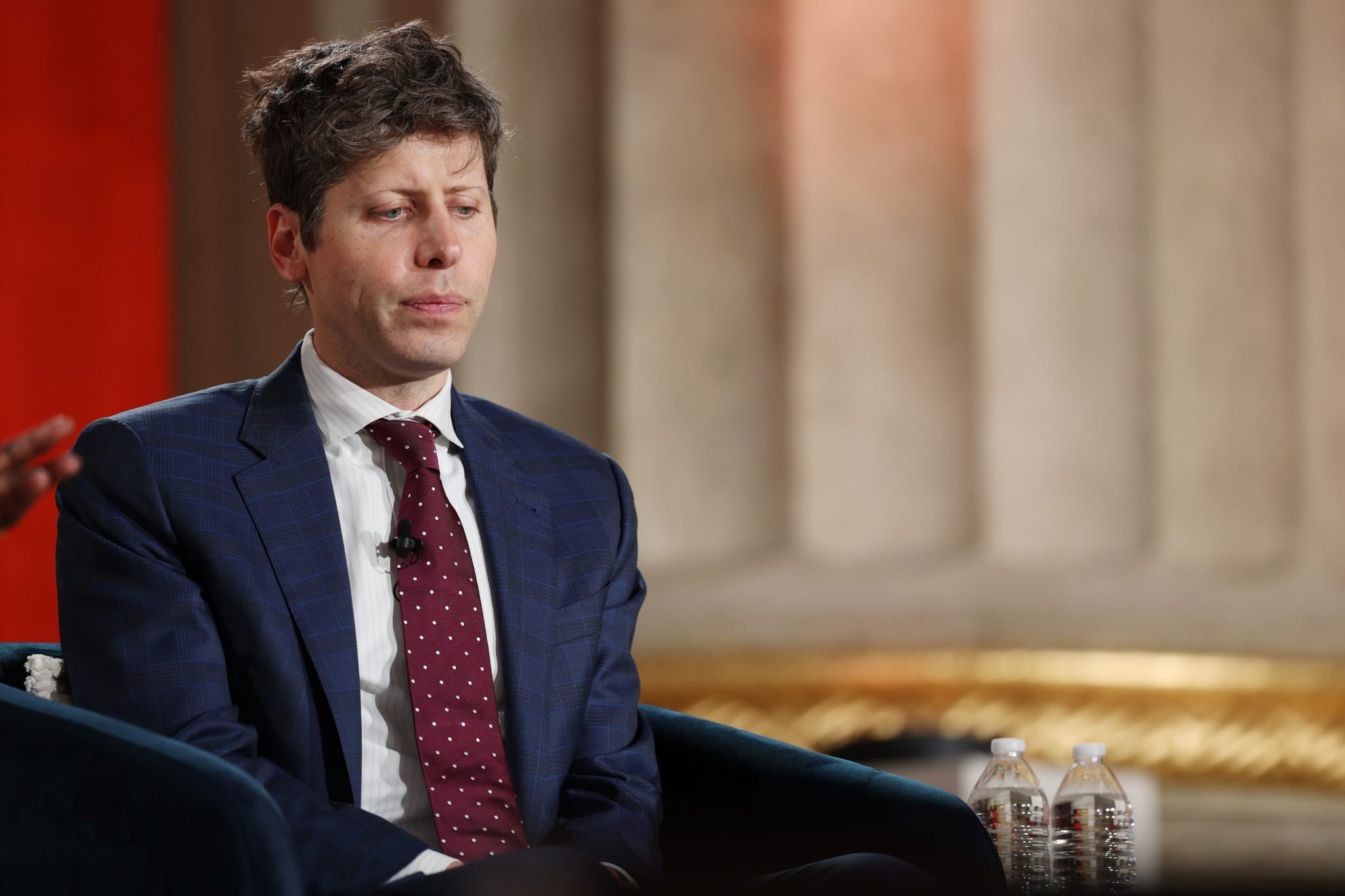
AI Executive Attack: Growing Violence Threatens Tech Leaders
A shocking attack on OpenAI CEO Sam Altman in San Francisco has revealed a disturbing escalation in anti-AI sentiment, with authorities discovering a kill list targeting prominent artificial intelligence executives. The incident, which occurred on April 13, 2026, involved molotov cocktails and gunshots, marking a dangerous new chapter in the growing tensions surrounding AI development as 64% of Americans report feeling nervous about AI-powered products and services.
The Attack That Shook Silicon Valley
The assault on Sam Altman represents the first documented case of targeted violence against a major AI executive, sending shockwaves throughout the technology industry. According to law enforcement sources, the perpetrator had compiled a detailed list of AI company leaders, suggesting a coordinated campaign of intimidation against those driving artificial intelligence innovation.
The attack unfolded in broad daylight near OpenAI's San Francisco headquarters, where Altman was reportedly approached by an individual who first threw incendiary devices before opening fire. While Altman escaped without serious injury thanks to quick-thinking security personnel, the incident has fundamentally altered the security landscape for tech executives.
"This wasn't a random act of violence," said Dr. Sarah Chen, a cybersecurity expert at Stanford University. "The existence of a target list indicates premeditation and suggests we may see copycat attacks. The AI industry must take this threat seriously."
The FBI has taken over the investigation, treating it as a potential domestic terrorism case. Sources close to the investigation report that the attacker's manifesto outlined grievances against AI development, including concerns about job displacement, privacy violations, and what they termed "technological tyranny."
Public Sentiment and the Growing AI Backlash
The attack comes amid mounting public anxiety about artificial intelligence, with recent polling showing that 64% of Americans express nervousness about AI-powered products and services. This statistic reflects a complex relationship between the public and AI technology, where fascination with capabilities is tempered by fear of consequences.
The concerns driving this anxiety are multifaceted. Job displacement remains a primary worry, particularly among white-collar workers who previously felt insulated from automation. Recent studies suggest that AI could impact up to 40% of jobs globally within the next decade, creating legitimate economic anxiety that extremists may exploit.
Privacy concerns also fuel public unease. As AI systems become more sophisticated at analyzing personal data, many Americans worry about surveillance and manipulation. High-profile incidents involving AI-generated deepfakes and misinformation have only amplified these fears.
"The gap between public understanding and AI capabilities is creating a breeding ground for extremism," explained Dr. Michael Torres, a technology policy researcher at MIT. "When people feel threatened by something they don't understand, controlled by forces beyond their influence, some may turn to violence."
Social media platforms have become echo chambers where anti-AI sentiment can radicalize quickly. Forums dedicated to "AI resistance" have grown exponentially in 2026, with some promoting increasingly violent rhetoric against technology leaders.
Industry Response and Security Escalation
The attack has prompted an immediate security overhaul across major AI companies. Google, Microsoft, Meta, and other tech giants have reportedly increased executive protection details and implemented new threat assessment protocols. Some companies are considering relocating key personnel or implementing remote work policies for senior leadership.
"We're seeing a fundamental shift in how tech companies approach executive security," said James Morrison, a former FBI agent who now advises technology firms. "What was once focused on corporate espionage and cyber threats must now address physical violence and domestic terrorism."
The incident has also accelerated discussions about industry responsibility. Critics argue that AI companies have moved too quickly without adequate public engagement, creating the conditions for backlash. Supporters counter that innovation cannot be held hostage by extremist threats.
Several AI executives have already modified their public appearances. Scheduled conferences and speaking engagements are being reassessed, with some events moving to virtual formats. The annual AI Summit, planned for May 2026 in San Francisco, may implement unprecedented security measures.
Industry leaders are also grappling with communication strategies. How do you continue advocating for transformative technology while acknowledging legitimate public concerns and condemning violence? The balance between transparency and security has become more complex than ever.
The Broader Context: AI Ethics and Public Trust
This attack illuminates the urgent need for better public dialogue about artificial intelligence development. The technology industry has often been criticized for moving fast and breaking things, but the stakes are now measured in human safety as well as societal impact.
The concentration of AI development among a few major companies has created what critics call "technological oligarchy." When a handful of executives make decisions affecting billions of lives, some individuals may feel that violence is their only recourse for influence. This perception, while misguided, reflects real concerns about democratic participation in technological governance.
Educational initiatives have struggled to keep pace with AI advancement. Most Americans lack basic understanding of how AI systems work, making them susceptible to both utopian promises and dystopian fears. This knowledge gap creates space for extremist narratives to take root.
Regulatory frameworks remain incomplete, further fueling public anxiety. While the European Union has advanced comprehensive AI legislation, the United States continues to rely on a patchwork of state and federal initiatives. This regulatory uncertainty allows worst-case scenarios to flourish in public imagination.
The attack also highlights the human cost of rapid technological change. Behind the statistics about job displacement and economic disruption are real people facing uncertainty about their futures. When combined with political polarization and social media amplification, this anxiety can metastasize into dangerous extremism.
Expert Analysis: A Turning Point for the Industry
Technology experts and security analysts view the Altman attack as a potential watershed moment for the AI industry. "We're witnessing the birth of a new form of domestic terrorism," warned Dr. Lisa Rodriguez, director of the Center for Technology and Security at Georgetown University. "Anti-AI extremism could become as significant a threat as other forms of ideological violence."
The incident has prompted calls for a new approach to AI development that prioritizes public engagement alongside technical innovation. "The industry can no longer afford to operate in isolation," said former Google executive Dr. Amanda Foster. "Trust-building must become as important as algorithm optimization."
Some experts suggest that the attack might paradoxically benefit the industry by forcing difficult conversations that have been postponed. "Sometimes it takes a crisis to create the conditions for meaningful change," noted technology historian Dr. Robert Kim. "This could be the moment when AI development becomes truly accountable to public concerns."
However, others worry about a chilling effect on innovation. If AI researchers and executives face physical threats, will the brightest minds choose safer career paths? The long-term implications for American technological competitiveness could be significant if talent flees the field.
What's Next: Security, Policy, and Public Engagement
The immediate focus will be on security and preventing copycat attacks. Federal authorities are coordinating with local law enforcement to assess threats against other AI executives. The Department of Homeland Security is reportedly developing new protocols for protecting technology infrastructure and personnel.
Congressional hearings on AI safety, previously focused on technical risks, may expand to address physical security and domestic terrorism. Legislators are likely to face pressure for both stronger AI regulation and enhanced protection for technology leaders.
The industry response will shape AI development for years to come. Companies must balance transparency with security, innovation with caution, and technological capability with social responsibility. How they navigate these tensions will determine whether public trust can be rebuilt or whether extremist violence becomes normalized.
Looking ahead, the integration of AI into daily life will continue regardless of isolated attacks. The question is whether that integration happens through inclusive dialogue or despite violent opposition. The choices made in response to this incident will echo throughout the technology sector and society at large.
For more tech news, visit our news section.
Staying Informed in an Age of Technological Uncertainty
As AI development continues amid growing security concerns, staying informed about technological trends becomes crucial for personal and professional success. The rapid pace of change, combined with public anxiety and now physical threats, creates an environment where accurate information and thoughtful analysis are more valuable than ever. Understanding these developments helps individuals make better decisions about their careers, investments, and daily lives in an AI-driven world. Join the Moccet waitlist to stay ahead of the curve.